Kazan Away – Forget It

I’m pathetic at cards. I pick up the rules easily enough but then it’s pretty much all a blur. So few numbers and colours, frankly it’s not that complex, but if you waited for me to work out what to do, you’d be there all night. And people round the table, staring…Whatever the opposite of a poker face is, I’ve got it. A fishface? Derren Brown could read me in a second, then use his spare time learning how to spell his name properly. Bluff and I’d be quivering like an electrocuted jellyfish. Might as well hang a neon sign round my neck with my hand showing.

But even I know there’s a variant of poker where you have the opportunity to keep the cards that you believe to be the strongest and discard the rest in the hope of replacing them with better ones later on. Luckily for Spurs, Harry’s obviously better at poker than I am. Kazan away was his throwaway. Defeat still leaves us in a strong position as the chips hit the table and the brave hold their nerve.

This stage of the Europa league is all about getting out of the group with the minimum of effort. Playing a weakened team is not a sign of a lack of priority for this competition – on the contrary, we should be aiming to win it. It’s about doing just enough to get through without wrecking the rest of the long season to come. I detest writing about football in this manner. As anyone who’s read this blog before knows, or indeed has read my report of the QPR match, football is something far more entertaining, profound and beautiful, whichever team you support. However, that’s the way it is. Not Harry’s fault: point the finger at UEFA’s wretched money-grabbing blazered accountants who understand balance sheets but not the power and glory of the sport, thus creating tournaments with matches that have no meaning and where failure in the Champions League is rewarded with a place in the final stages of another cup.

Redknapp has to play the game and he’s done so superbly. Not only was this our first defeat, he’s successfully bloodied young men like Carroll and Livermore, kept Gomes and Cudicini on their toes and generally made the whole squad feel involved. Yesterday we had the added bonus of Pienaar and Gallas playing their way back to fitness.

When Harry announced at the start of the season that he was going to play the kids in Europe, I thought he meant men like Townsend and Livermore, Kane too, who are young but have played in the Championship and I still suspect Redknapp didn’t wish to go as deep as Fredericks. However, we’ve managed just fine.

As soon as the draw was announced, this was the discard. A long trip into the unknown versus the team with the best pedigree in the group was never a priority. Win the home games and pick up a couple of away points, that’s it.

At this stage, he always wanted to be right where we are, our destiny in our own hands. This may sound like limited ambitions but not only are they totally realistic, they are not easy to achieve as Villa and Manchester City have found out to their cost over the last couple of seasons. I would play a full team at home against PAOK, a Wednesday game sandwiched by Saturday fixtures against West Brom and Bolton, to make certain of 3 points, then see what needs to be done in Ireland.

Last night we put in a reasonable effort but did not deserve to win. Having said that, it’s a shame the goal came in the manner in which it did, a fine free-kick but needlessly conceded by Bassong, who had one of his concentration lapses again.

Carroll and Livermore impressed me again. Not perfect by any means but they both have an exemplary attitude and appetite even when things don’t always go the right way. They take responsibility, which can’t be said for players like Pav, who could have done more. Cudicini is a veteran but has same enthusiasm even after all these years. He was the pick, several fine saves to keep us in the game. Otherwise, we should have kept possession much better but that’s the problem with a scratch team in Europe.

We ended the game with a side so young, it’s a good job they’re aren’t being sponsored for Movember, they wouldn’t earn a penny. As I’ve said before, this isn’t a reserve team. Our best ‘age group’ youngsters are on on loan so we’re on the brink of qualification with our 10th choice midfielders. Given this stupidly structured competition, Harry’s played his hand to perfection.


I know you’ve had sleepless nights worrying about the Gazza competition. To put you out of your misery, when he signed for Spurs, Irving Scholar threw in a house for his parents, a BMW for his dad, a sunbed for his sister and fishing gear for the great man himself. Allegedly the sunbed and fishing rod came from Scholar’s own pocket.

Thanks to everyone who entered and congratulations to Dave Spurr, who won. That appears to be his real surname – impressive.

The Joy of Three

As the first half drew to a close, like kids again Spurs knocked the ball around just for the sheer pleasure of playing the game. The pressures of the Premier League were forgotten such was our dominance, replaced by infectious exuberance and a freedom and delight in being able to do anything that can be done with a football.

Rangers were as disoriented as a drunk leaving the pub at closing time, focussing everything on keeping going yet unable to exert any control over their fate as they topple and teeter towards the gutter. They had been stretched this way and that as Spurs pulled out all the skills in their repertoire. First to every loose ball, strong in the tackle. Short passes threaded a path through the defence, finding space where there was none. Sucked in, defenders then saw the ball sprayed effortlessly from side to side. Wherever you looked, there was a Tottenham man on the end. Adebayor sneaking into channels, Benny pinging it far and wide, Bale thundering down the left then popping up in the box, Van der Vaart and and Luka exchanging one twos (and threes and fours) at the edge of the box. No respite – Rangers’ underpowered attack couldn’t hold the ball at all and back it came.

Hardly surprising they struggled: this was pure football and breath-taking to watch. The skills on the ball, the pace and the movement combined – we fans looked on in awe and shared the players’ joy.

The only disappointment was that we should have scored more. We could have been two up in the first few minutes and despite our good play missed a fair few opportunities, even allowing for Kenny’s excellence in goal. Adebayor especially was out of touch with several weak finishes having accomplished all the hard work of getting in the right place and controlling the ball to perfection. Still, it was brilliant, crazy stuff with shots flying in, last-ditch tackles, desperate saves and near misses.

Bale, powerful and unable to be contained even by his now regulation double marking, sent a series of crosses lasering across the box before thumping home the first goal. Lennon set him up, a quiet game in terms of attacking but two assists as he came off his wing. Football at its simple best – a decent move then up the pace as the ball nears the box, two simple quick touches, Bale’s explosive finish.

Rafa was glorious now, working tremendously hard to get on the ball in between QPR’s back four and their midfield. He was far too good for them, and linked deliciously with, well, everyone. His goal was well-taken but made by his ball control, for the second time in the game he pulled down a colleague’s shot, King this time, Luka earlier, as easily as if the mascot had rolled the ball towards him in the warm-up. A fabulous 45 minutes, he’s leaner and hungry. As Harry remarked this week, I too feel for Defoe who has upped his game this season but Rafa has risen to the challenge. Shows the value of competition to play in a good team. Good player but where does he fit? Argument over.

Adebayor’s movement makes this all possible. Not at the top of his form, he nevertheless makes the space either to receive a pass or for others to move around him. Luka appreciates it and makes the most of it. Although others eclipsed him yesterday, interesting to see Barton single him out for praise on twitter last night. Those closest to him know his value. Alongside Scott Parker they ran the midfield. Parker in the first half was prompting a and probing, or tidying up like a hyperactive womble. Shorter passes mostly, busy and businesslike. Next time when you check out our highlights and goal attempts, see how often he’s at the edge of the camera shot, hanging around having done his work and letting others have the limelight.

As the half ended, the boys were having fun. Flicky and kicky, all clever stuff but less effective than simple passing and hard work. Totally on top but they didn’t look hard enough at the scoreboard. Only two goals to show for it, concede and we’d be wobbling. Whilst I’d like to think that this blog is read avidly throughout the game, it’s frankly unlikely that opposition managers drop by to pick up a few tips about Spurs. If they did, I’d tell them that the best way to take us on is to attack. But hey, who’s interested in the ramblings of a fan, what do we know?

QPR discovered this too late. 4-3-3 with Barton where he belongs in centre mid and Bothroyd a focal point immediately put us on the back foot and by the time we recovered our composure, sure enough we had conceded and were wobbling like a Weeble on speed. Full credit to our opponents for picking themselves up, and it could have all fallen apart for us if their finishing had been anywhere near as sharp as their fans were vocal.

Another silly goal from a set-piece. Bothroyd on the keeper and left unmarked when he simply moved three yards. Last season we gave away fewer goals from set pieces than any other Premier League side but now it’s back to the bad old days.

The best goal of the game clinched it, a precise interchange at the edge of the box before Bale ripped a blast first time. Top class set-up with a thrilling finish, wonderful goal. But who’s this loitering as it went in. Scott Parker I do believe, enjoying the moment with quiet satisfaction. He’d done his work, which won’t turn up on any stat sheet but it was as much his goal as Bale’s. Where others had been frantically trying too hard and giving the ball away, he picked it up and kept hold until the right moment presented itself. Simple, effective and match-winning, it summed up his second half where he was the master of the Lane. Passing, tackling, once, twice, three times because he does not give up. As we were pressured, without needing telling he tucked into the back four to help out, then moved it on to start another attack. He left to a deserved standing ovation from all sides of the Lane.

Another terrific game,  potential realised, superb entertainment. Churlish to mention that in the last two matches, against better teams with better finishers we would have been punished for missed chances and slack defending. League title? Do me a favour. Contenders for cups and top four? It’s all I ask, to be in with decent shout. But we are the form team and others are scared of us right now, so let’s enjoy the moment. 5th in the league, is that 19 points from a possible 21? Need to check but no need to research how good it makes me feel. In the first half we were blessed, simply blessed.

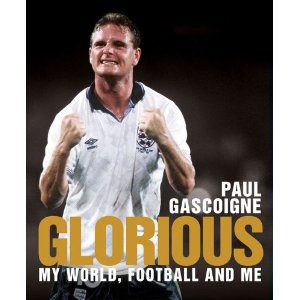
Still time to win a copy of Gazza’s new book ‘Glorious’ – just scroll down, marvel at the insight and profundity of my review, then answer the question at the end. Good luck!

Glorious – Gazza In His Own Words. Read the Review, Win the Book!!

Last summer I heard rumours that Paul Gascoigne was dead. Unlike the rest of the rubbish that circulates the ether, sadly this had the ring of truth. He had been looking more pale and drawn than ever and the stories more bizarre, if that were possible.

Gazza stopped being daft as a brush years ago but the nation kept on laughing. One of the finest footballers of his generation, he’d become a figure of ridicule, easy meat and easy laughs from comedians getting fat on the proceeds of panel shows. In football, mental health problems are taboo. He’d sunk so low that he was denied even his illness. On the contrary, his suffering was exploited by reporters after a story and chairman offering him work.

Mercifully, he’s survived. It’s impossible to know if the empathy from Spurs fans played the tiniest part in keeping him going, but I can’t ever recall such a wave of goodwill towards an ex-Spur. He’s hidden away in Bournemouth, out of rehab but still being supported well, slow progress but steady.

The book is a lavishly illustrated conversation with Paul about his entire career, just turn on the recorder and out streams an engaging, flowing account of his life from the man himself. After a while, close your eyes and you can imagine him in the room, chatting over a cup of tea. This plus the hundreds of colour photos make it a pleasant, welcoming read that tells you about the man’s football career without stretching the reader too far.

The therapy that has played a part of Gascoigne’s rehabilitation enables to him to reflect on what’s gone wrong in an honest, self-aware manner without becoming maudlin or self-indulgent, as is the fate of many other celebrities who have been through the same process.There’s no evaluation, either from an outside voice or from Gascoigne, and nothing about his mental health or his career, if you can call it that, since retirement. This is purely and simply about football. The reader is left to provide the context and whilst many familiar episodes are covered, like the dentist’s chair, escaping the boredom of international tournaments and high jinks at Rangers, there is a refreshing lack of spin or image. This isn’t Gazza – daft as brush, Gazza – the alcoholic or even Gazza – the idiot. It’s just Gazza. He acknowledges in a matter of fact way that he should not have done certain things but what comes over is the total lack of malice in anything that he did. He never had an agenda, a grudge or sought to exact revenge. Most of the time he got into trouble because just the opposite, he never had a plan or thought anything through, but you sense this is why, despite all the things he has got up to, no one in football seems to have a bad word to say about him.

In fact, he comes over as boyish, getting into the same scrapes as a man as he did as a lad. His mind wandering onto other things, football mostly when he should have been studying, losing Kevin’s Keegan’s boot as an apprentice then forgetting his own boots before a crucial game in Euro ‘96. Same response – he can’t tell anyone so it’s a farcical attempt to cover it up, in the case of England playing the entire first half in Sheringham’s spare boots, which were the wrong size.

He confirms what Spurs fans already know, that he played the best football of his career whilst at White Hart Lane. So it’s a little disappointing that the space given over to Spurs is much less than that devoted to England or Rangers. I guess the publishers understand the market. Also, many anecdotes will have a familiar ring for anyone who has read Hunter Davies’ excellent book on Gazza.

The section on Spurs focuses on his remarkable contribution to the 1991 cup run. At the time it seemed to me that he single-handedly inspired the team to Wembley. In reality, the famous victories in the semi-final against Arsenal and the final were founded upon excellent teamwork, and Gascoigne praises the unsung Paul Stewart in particular for “covering the space for me” as Gazza was knackered, either because he was playing in pain through injury or because he prepares for a vital cup-tie by playing 15 sets of squash with John Moncur the night before as he can’t sleep. But the inspiration and glory are rightfully his. A hat-trick against Oxford, a scintillating winner away to Portsmouth, another versus Notts County, all tricky ties, plus the free-kick that will ensure his legendary status for as long as anyone talks about Tottenham Hotspur. Typically he doesn’t dwell on it – cue anecdotes involving nurses, hospitals and testicles – but the effort he made to play through injuries and then to sweat blood to get fit after surgery is nothing short of heroic. He did that for the good of playing football. He did that for us.

In any walk of life, the very greatest tread a fine line between the bold and the reckless. To be original and different, the individual has to think and do something that is fresh and new. What is to our heroes an act of bravery, to us mere mortals seems like the height of foolishness. Gascoigne treads that fine line throughout his career and this book helps you walk with him. The character traits that made him infuriating and a magnet for trouble are the very same that enabled him also to attempt the most outrageous feats on the pitch, and because he was so, so wonderful, he succeeded where most would fail.

Gazza’s an entertaining companion and this is a engaging read in time for the Christmas market. It’s not a confessional, but if there is a message from a fallen hero to the young players of today, it’s not about the dangers of the booze, the sycophants or the lack of support of family and friends, it’s that players should love and cherish the game. If that’s Gazza’s legacy, then this book is a success, for it is above all else about a man who just wants to play football. Rather than the grey, bewildered figure of fun blinking uncomprehending in the spotlight, running on empty, please remember him as he should be remembered, the breath-taking talent of the one of greatest Tottenham players there has ever been.

A couple of my other pieces on Gazza here, about his career, and here, about mental health, Chris Evans and Danny Baker

Glorious – My World, Football and Me by Paul Gascoigne   Published by  Simon and Schuster

WIN A COPY

My copy actually, read once, one careful owner, and the biryani stains will come out with a bit of soap and water.

To win answer this question:

To persuade Gazza to sign for Spurs and not Fergie, Irving Scholar sealed the deal with a few extra items that don’t normally feature in transfer negotiations. Name any of them.

If you need a nudge in the right direction, one item Gazza would be delighted to receive these days and would put to good use in his leisure time (and before you start, he’s off the booze)

E-mail your answer to: alan@tottenhamonmymind.com

Closing date: Tuesday 1st November, 8pm, all correct entries into a hat, first one out wins

And while you’re here, 1 family, 3 generations of Spurs fans are taking part on Saturday in a Family Hike in aid of the British Association for Adoption and Fostering.

You can sponsor us here: Just Giving – Family Hike for BAAF

Just a quid would be great.

Spurs And The Riots – What Next?

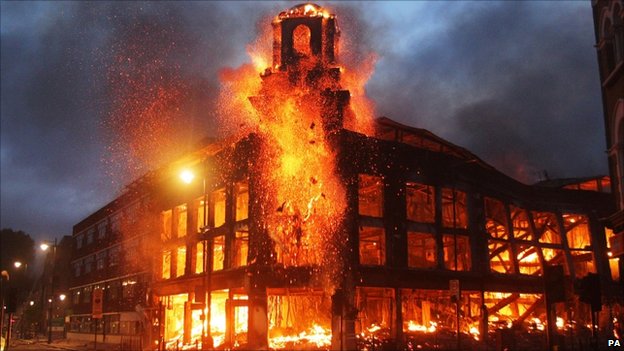
The disturbances on the night of August 6th following a vigil for local man Mark Duggan, allegedly shot by police three days earlier, became the spark that ignited the most widespread and sustained civil disobedience in Britain since the early 80s. Yet Tottenham remains the area that has suffered the most. As well as the damage to property that resulted in the subsequent demolition of several buildings, up to 200 people were made homeless. Urgent calls for donations of food, clothing and nappies were reminiscent of disaster appeals. A leisure centre provided emergency shelter for families in need.

The burnt-out Carpetright store heavily featured on the news is a few hundred yards from the ground but the club remained unscathed apart from some damage to the ticket office. Tottenham High Road, the main route to the ground by car and public transport, remained closed for several days, causing the postponement of the season’s opening fixture against Everton.
Tottenham is an area of considerable social deprivation. Tottenham Hotspur, regularly in the world’s top 15 in terms of annual income, falls within a ward that is amongst the 5% most deprived in England, while in Tottenham as a whole 80.3% of children live in low-income homes. It is natural therefore that both local residents and politicians should look to the club, the largest local private employer, as a major partner as the rebuilding begins.

Victoria Hart lives on the High Road and spent a long Saturday night comforting a frightened and bewildered 6 year old as the troubles raged outside her window. Not a fan, she is nevertheless convinced that the club has an essential contribution to make in restoring the health and well-being of this fractured community.

“We all feel very damaged by the riots and the destruction around us. We want to retain a pride in Tottenham but it’s difficult when the press perception seems to be of a locality where a riot was ‘just bound’ to happen. I hope the football club, being one of the really identifiable places on the High Road, can help us to rebuild. And I really mean more emotionally than financially.”

Early signs were positive. Spurs Chairman Daniel Levy swiftly promised support now and in the future:

“The Club is committed to supporting its community with help with both the physical clean-up of our area and the longer term rebuilding of community spirit. It is more critical than ever that community, business and political leaders…now work closely together to support the regeneration of this area and we shall certainly look to play our part in that.”

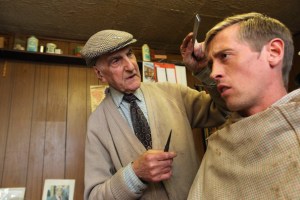
The fans responded too. Many travelled to Tottenham on their spare Saturday to labour alongside local people as the clean-up continued, whilst an internet appeal of behalf of 89 year old barber Aaron Biber raised over £35,000 as word spread amongst the messageboards and twitterati. The refurbished shop was reopened by Peter Crouch, looking decidedly edgy despite the carefully choreographed photo opportunity as Biber approached from behind with clippers in hand.
Otherwise it was left to Benoit Assou Ekotto to respond on behalf of the players. This comes as little surprise to Spurs fans. Derided by Hansen and Dixon from the comfort of the MOTD sofa, the full-back is fast attaining cult status for both his dashing if occasionally risky performances and his grounded attitude. Travelling London by public transport, he’s made a conscious effort to be close to the city and its people, eschewing the trappings of celebrity in order to ‘live a normal life’. Aware of his own impoverished upbringing, he understands that football is part of something much bigger. It is he rather than the British players who talks earnestly to local people a few days after the disturbances.

The club has developed an increasing awareness of the community over the past few years. In 2007 they invested £4.5m in a Foundation that boasts a proud record of achievement: 470 hours of sporting and education sessions for children a week, support for the unemployed, a chance for the homeless and adults with learning disabilities to play football plus the highest rate of charitable giving in the Premier League.

Yet the local impact is questionable. Mark Perryman, author, co-founder of Philosophy Football and West Stand season ticket holder, trenchantly dismisses the club’s performance in the 25 years he’s lived locally:

“The club makes the name of the borough known worldwide but otherwise I don’t see what it gives the area. Away from the ground itself the club’s presence physically is almost non-existent and it’s painfully obvious how disconnected the club is. It’s just not a significant institution in the community in which I live.”

The club’s investment in ‘Football in the Community’ schemes is generous and laudable, but the question is, which community? The popular coaching sessions and soccer schools reach out primarily to the relatively affluent suburban fan bases in Hertfordshire and Essex rather than the N17 estates and thus are designed to win fans rather than directly benefit the local community.

Perryman also casts doubt on their claim as a major employer, pointing out that most of the jobs are on matchdays only and are not filled by local people. Also, some of the highest ticket prices in the country mean locals cannot afford to watch their team.

This problem is not confined to Spurs. Rather, it’s one of the consequences of the modern game as supporter demographics change in response to increased prices and the blurring of social boundaries. Perryman again:

“London clubs aren’t London clubs, they’re Home Counties clubs. Those who can afford season tickets don’t live in inner London. They are not in the community where those kids emerged from. Where I sit, they [fellow supporters] don’t seem to like Tottenham as a place. There may have been a connection a generation or so ago, not now.”

The meaning of all this is not lost on Victoria Hart: “I’d say a lot of people like me who live locally retained a kind of benign neutrality towards the club. It is a part of the local area and the local history and of course, carries the name of the place we call home but especially recently with the attempts to bid for the Olympic Stadium, we didn’t kid ourselves that they’d really rather be further out towards Essex where most of the fan base seem to live.”

This is the paradoxical nature of the Hotspur in Tottenham, an attachment to an area but distant and out of reach at the same time. “I see the fans coming and going past our homes and regard them fondly but I’ve never been to a Spurs match – too expensive!”

Her words hint at the most revealing measure of the club’s relationship to the community of which it has been an integral part for 129 years, the planning for a new ground. Precisely as he talks about increased community engagement, Levy is actively exploring a move away from Tottenham entirely. Economics overrides history or community responsibility when it comes to the option of the Olympic Park site in east London to replace the venerable but creaking White Hart Lane, which will be cheaper to build and generate greater income from non-football activity. Undeterred by opposition from a large and vocal section of the fans and a public aghast that Spurs propose to demolish the Olympic stadium built with taxpayers money and which will be the focus of world attention for two weeks next summer, Levy is keeping the option open for as long as possible. Even the decision to award West Ham the dubious honour did not stop him launching an expensive and ultimately successful judicial review. His sympathetic and compassionate support for the local community suddenly sounds decidedly hollow.

The alternative is a 56,250 capacity ground with an ‘end’ and stands close the pitch right next to White Hart Lane. Properly called the Northumberland Development Project, it includes housing, a hotel, supermarket and renovated listed buildings. Together with improved transport links it should reinvigorate the area as well as the finances of the football club. Supporters’ groups continue the campaign to stay in Tottenham but now the project takes on a significance greater than merely preserving the club’s heritage.

It’s an ill wind and although the area lost out on the latest round of government regeneration money, the recent problems have boosted the case for grants from the Regional Growth Fund, which could cut the costs Spurs will incur in upgrading public transport links and other improvements around the ground, costs they have long claimed should come from the public purse. It would not be factor if they moved to Stratford, of course.

I have asked the club for a comment regarding their response to the community in the wake of the riots but they have not replied. Levy would say that he must do the best for the club. His business acumen has left the club financially secure and has won grudging admiration from most fans, even those who wanted greater investment in the team over the last two years. His deadline-day brinkmanship has become legendary and I respect his refusal to pay over the odds. However, for every great deal – Lennon, Keane and a pound of flesh from a destitute Leeds comes to mind – there have been opportunities missed because of his refusal to compromise. He would do well to ensure that he doesn’t make the same mistake over what is effectively the future of the club.

His decision is further complicated by the increased number of stakeholders who are now part of the equation. As chairman he is duty bound to keep the PLC on a sound financial footing. However, the interests of shareholders seeking a profit may not not be the same as fans wanting success on the pitch. Also, to ascertain the intentions of his employer, ENIC, look no further than the name: it’s an Investment company looking for long term return, which may best be served by making the club ready for a sale.

In addition, there’s now a responsibility to the local community who desperately want the club to stay where it is, a powerful argument that cuts little or no ice on the balance sheet. Indeed, these aims are in direct conflict with those of investors. In my experience of working in the charitable sector, private companies are comfortable with activities like fund-raising and donations but less sure-footed when it comes to the openness and adherence to goals that are not easily measured that true engagement requires. He may have to adjust his approach.

One outcome could please everyone, however: the riots as leverage for assistance to make the NDP a profitable option again. Some characterise Levy as a ruthless negotiator but it is a cold hard fact that the disturbances have suddenly shifted the financial impasse. In late August, London mayor Boris Johnson made available a large sum, at least £8m, to cover these infrastructure costs on condition that Spurs dropped the review. Even MP David Lammy thought agreement had been reached but the following day Spurs tuned up in court and went ahead as if nothing had happened.

The deadline for another offer came and went this week. ENIC say the City Hall deadline is unreasonable, and “the correct level” of public money is “critical … to create a community with hope and prospects … We cannot be expected to do this single-handedly.” Levy clearly believes the offer will not go away just because the deadline has passed. However, there may come a time when local politicians find better ways of spending their £8m windfall.

Another stakeholder has recently entered the fray. Spurs Future is a loose collective of fans who has have submitted detailed proposals to the club regarding a ‘community share’. Basically, this allows for up to £50m of investment from fans and other sources who purchase shares or bonds for the purpose of financing ventures of a community purpose. A return on the investment is possible and it encourages greater participation and involvement. I understand talks have taken place with the club but it’s at an early stage. £50m could come in handy for ENIC but they may baulk at ceding any influence over the running of the club to supporters. There’s also the question of how fans see the idea of giving this prodigious sum to a company owned by Joe Lewis, a man worth £2.8bn and 6th on the world football richlist.

Talking with residents, the club is part of their lives and has the potential to be the focus for their determination to rebuild relationships as well as bricks and mortar. The stadium project, important though it may be, is not in itself enough. “I have no great faith in the idea that stadia can regenerate an area,” says Mark Perryman, concerned about the future of his community and his club. “Spurs has to develop a relationship with those estates where the kids live,” says Mark Perryman. “They must develop dialogue not summer schools.”

I leave the last word with Victoria Hart. “I hope it helps the club and the community work together to make Tottenham a better place. That would help and it would help emotionally as we residents feel a little abandoned at the moment. We always needed the club but we need it a whole lot more now.”