Spurs And The Riots – What Next?

The disturbances on the night of August 6th following a vigil for local man Mark Duggan, allegedly shot by police three days earlier, became the spark that ignited the most widespread and sustained civil disobedience in Britain since the early 80s. Yet Tottenham remains the area that has suffered the most. As well as the damage to property that resulted in the subsequent demolition of several buildings, up to 200 people were made homeless. Urgent calls for donations of food, clothing and nappies were reminiscent of disaster appeals. A leisure centre provided emergency shelter for families in need.

The burnt-out Carpetright store heavily featured on the news is a few hundred yards from the ground but the club remained unscathed apart from some damage to the ticket office. Tottenham High Road, the main route to the ground by car and public transport, remained closed for several days, causing the postponement of the season’s opening fixture against Everton.
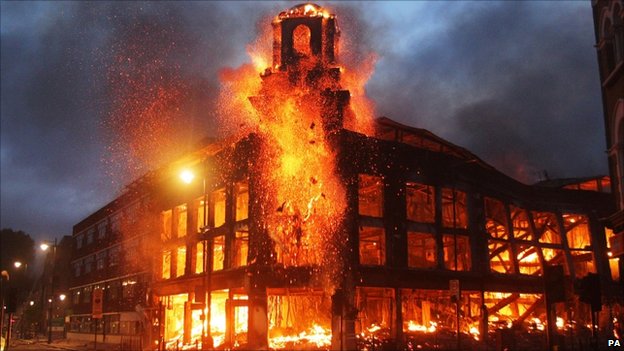
Tottenham is an area of considerable social deprivation. Tottenham Hotspur, regularly in the world’s top 15 in terms of annual income, falls within a ward that is amongst the 5% most deprived in England, while in Tottenham as a whole 80.3% of children live in low-income homes. It is natural therefore that both local residents and politicians should look to the club, the largest local private employer, as a major partner as the rebuilding begins.

Victoria Hart lives on the High Road and spent a long Saturday night comforting a frightened and bewildered 6 year old as the troubles raged outside her window. Not a fan, she is nevertheless convinced that the club has an essential contribution to make in restoring the health and well-being of this fractured community.

“We all feel very damaged by the riots and the destruction around us. We want to retain a pride in Tottenham but it’s difficult when the press perception seems to be of a locality where a riot was ‘just bound’ to happen. I hope the football club, being one of the really identifiable places on the High Road, can help us to rebuild. And I really mean more emotionally than financially.”

Early signs were positive. Spurs Chairman Daniel Levy swiftly promised support now and in the future:

“The Club is committed to supporting its community with help with both the physical clean-up of our area and the longer term rebuilding of community spirit. It is more critical than ever that community, business and political leaders…now work closely together to support the regeneration of this area and we shall certainly look to play our part in that.”

The fans responded too. Many travelled to Tottenham on their spare Saturday to labour alongside local people as the clean-up continued, whilst an internet appeal of behalf of 89 year old barber Aaron Biber raised over £35,000 as word spread amongst the messageboards and twitterati. The refurbished shop was reopened by Peter Crouch, looking decidedly edgy despite the carefully choreographed photo opportunity as Biber approached from behind with clippers in hand.

Otherwise it was left to Benoit Assou Ekotto to respond on behalf of the players. This comes as little surprise to Spurs fans. Derided by Hansen and Dixon from the comfort of the MOTD sofa, the full-back is fast attaining cult status for both his dashing if occasionally risky performances and his grounded attitude. Travelling London by public transport, he’s made a conscious effort to be close to the city and its people, eschewing the trappings of celebrity in order to ‘live a normal life’. Aware of his own impoverished upbringing, he understands that football is part of something much bigger. It is he rather than the British players who talks earnestly to local people a few days after the disturbances.

The club has developed an increasing awareness of the community over the past few years. In 2007 they invested £4.5m in a Foundation that boasts a proud record of achievement: 470 hours of sporting and education sessions for children a week, support for the unemployed, a chance for the homeless and adults with learning disabilities to play football plus the highest rate of charitable giving in the Premier League.

Yet the local impact is questionable. Mark Perryman, author, co-founder of Philosophy Football and West Stand season ticket holder, trenchantly dismisses the club’s performance in the 25 years he’s lived locally:

“The club makes the name of the borough known worldwide but otherwise I don’t see what it gives the area. Away from the ground itself the club’s presence physically is almost non-existent and it’s painfully obvious how disconnected the club is. It’s just not a significant institution in the community in which I live.”

The club’s investment in ‘Football in the Community’ schemes is generous and laudable, but the question is, which community? The popular coaching sessions and soccer schools reach out primarily to the relatively affluent suburban fan bases in Hertfordshire and Essex rather than the N17 estates and thus are designed to win fans rather than directly benefit the local community.

Perryman also casts doubt on their claim as a major employer, pointing out that most of the jobs are on matchdays only and are not filled by local people. Also, some of the highest ticket prices in the country mean locals cannot afford to watch their team.

This problem is not confined to Spurs. Rather, it’s one of the consequences of the modern game as supporter demographics change in response to increased prices and the blurring of social boundaries. Perryman again:

“London clubs aren’t London clubs, they’re Home Counties clubs. Those who can afford season tickets don’t live in inner London. They are not in the community where those kids emerged from. Where I sit, they [fellow supporters] don’t seem to like Tottenham as a place. There may have been a connection a generation or so ago, not now.”

The meaning of all this is not lost on Victoria Hart: “I’d say a lot of people like me who live locally retained a kind of benign neutrality towards the club. It is a part of the local area and the local history and of course, carries the name of the place we call home but especially recently with the attempts to bid for the Olympic Stadium, we didn’t kid ourselves that they’d really rather be further out towards Essex where most of the fan base seem to live.”

This is the paradoxical nature of the Hotspur in Tottenham, an attachment to an area but distant and out of reach at the same time. “I see the fans coming and going past our homes and regard them fondly but I’ve never been to a Spurs match – too expensive!”

Her words hint at the most revealing measure of the club’s relationship to the community of which it has been an integral part for 129 years, the planning for a new ground. Precisely as he talks about increased community engagement, Levy is actively exploring a move away from Tottenham entirely. Economics overrides history or community responsibility when it comes to the option of the Olympic Park site in east London to replace the venerable but creaking White Hart Lane, which will be cheaper to build and generate greater income from non-football activity. Undeterred by opposition from a large and vocal section of the fans and a public aghast that Spurs propose to demolish the Olympic stadium built with taxpayers money and which will be the focus of world attention for two weeks next summer, Levy is keeping the option open for as long as possible. Even the decision to award West Ham the dubious honour did not stop him launching an expensive and ultimately successful judicial review. His sympathetic and compassionate support for the local community suddenly sounds decidedly hollow.

The alternative is a 56,250 capacity ground with an ‘end’ and stands close the pitch right next to White Hart Lane. Properly called the Northumberland Development Project, it includes housing, a hotel, supermarket and renovated listed buildings. Together with improved transport links it should reinvigorate the area as well as the finances of the football club. Supporters’ groups continue the campaign to stay in Tottenham but now the project takes on a significance greater than merely preserving the club’s heritage.

It’s an ill wind and although the area lost out on the latest round of government regeneration money, the recent problems have boosted the case for grants from the Regional Growth Fund, which could cut the costs Spurs will incur in upgrading public transport links and other improvements around the ground, costs they have long claimed should come from the public purse. It would not be factor if they moved to Stratford, of course.

I have asked the club for a comment regarding their response to the community in the wake of the riots but they have not replied. Levy would say that he must do the best for the club. His business acumen has left the club financially secure and has won grudging admiration from most fans, even those who wanted greater investment in the team over the last two years. His deadline-day brinkmanship has become legendary and I respect his refusal to pay over the odds. However, for every great deal – Lennon, Keane and a pound of flesh from a destitute Leeds comes to mind – there have been opportunities missed because of his refusal to compromise. He would do well to ensure that he doesn’t make the same mistake over what is effectively the future of the club.

His decision is further complicated by the increased number of stakeholders who are now part of the equation. As chairman he is duty bound to keep the PLC on a sound financial footing. However, the interests of shareholders seeking a profit may not not be the same as fans wanting success on the pitch. Also, to ascertain the intentions of his employer, ENIC, look no further than the name: it’s an Investment company looking for long term return, which may best be served by making the club ready for a sale.

In addition, there’s now a responsibility to the local community who desperately want the club to stay where it is, a powerful argument that cuts little or no ice on the balance sheet. Indeed, these aims are in direct conflict with those of investors. In my experience of working in the charitable sector, private companies are comfortable with activities like fund-raising and donations but less sure-footed when it comes to the openness and adherence to goals that are not easily measured that true engagement requires. He may have to adjust his approach.

One outcome could please everyone, however: the riots as leverage for assistance to make the NDP a profitable option again. Some characterise Levy as a ruthless negotiator but it is a cold hard fact that the disturbances have suddenly shifted the financial impasse. In late August, London mayor Boris Johnson made available a large sum, at least £8m, to cover these infrastructure costs on condition that Spurs dropped the review. Even MP David Lammy thought agreement had been reached but the following day Spurs tuned up in court and went ahead as if nothing had happened.

The deadline for another offer came and went this week. ENIC say the City Hall deadline is unreasonable, and “the correct level” of public money is “critical … to create a community with hope and prospects … We cannot be expected to do this single-handedly.” Levy clearly believes the offer will not go away just because the deadline has passed. However, there may come a time when local politicians find better ways of spending their £8m windfall.

Another stakeholder has recently entered the fray. Spurs Future is a loose collective of fans who has have submitted detailed proposals to the club regarding a ‘community share’. Basically, this allows for up to £50m of investment from fans and other sources who purchase shares or bonds for the purpose of financing ventures of a community purpose. A return on the investment is possible and it encourages greater participation and involvement. I understand talks have taken place with the club but it’s at an early stage. £50m could come in handy for ENIC but they may baulk at ceding any influence over the running of the club to supporters. There’s also the question of how fans see the idea of giving this prodigious sum to a company owned by Joe Lewis, a man worth £2.8bn and 6th on the world football richlist.

Talking with residents, the club is part of their lives and has the potential to be the focus for their determination to rebuild relationships as well as bricks and mortar. The stadium project, important though it may be, is not in itself enough. “I have no great faith in the idea that stadia can regenerate an area,” says Mark Perryman, concerned about the future of his community and his club. “Spurs has to develop a relationship with those estates where the kids live,” says Mark Perryman. “They must develop dialogue not summer schools.”

I leave the last word with Victoria Hart. “I hope it helps the club and the community work together to make Tottenham a better place. That would help and it would help emotionally as we residents feel a little abandoned at the moment. We always needed the club but we need it a whole lot more now.”
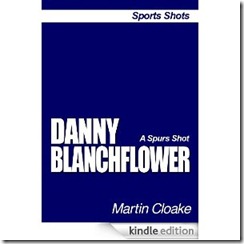

Martin Cloake On Danny Blanchflower, Spurs’ Geezers and the Current State of Play

Dead easy, this interviewing malarkey. Turn on the recorder, sit back, arrange the gems in some semblance of order and there you have it. At least you do when you speak to someone with the infectious enthusiasm of Martin Cloake. A leading authority on Spurs in print, many books written alongside co-author Adam Powley, his ardent passion for the club as journalist and fan remains undiminished.

His latest venture is an E-book called ‘Danny Blanchflower’, the first in a series of SportsSpurs Blanchflower Shots, extended essays that permit the analytical depth of a book but are accessible and readable for those of us without the time or cash to invest in the longer form on a regular basis. It’s new, it’s exciting and Martin is an evangelist for the medium

“What we have is a set of ideas about the growth of e-readers. This series of Spurs E-books which we hope will be part of something bigger, is tapping into people. Longer than an article, shorter than a book.”

Powley and Cloake have spotted a gap in the market. Given the amount about the club on Amazon, Kindle has been slow to catch up. “If you look at the Kindle store, put Tottenham Hotspur in, there’s not a lot of stuff there. It’s a market that people are using. We may be arrogant enough to think we are good enough but we have written books that people buy. We’ve had very good feedback, so we thought let’s put it out there and see how it goes.”

“Blanchflower is the first one, one on Hoddle which has just been completed. We’ll see how they sell and at the moment we’re looking at individual player profiles but depending on how this goes we may expand into other areas. What we don’t want to do is do something that we could do with a publisher. Horses for courses.”

Martin is at pains to stress that he is neither neglecting nor in competition with existing publishing methods. During our discussion he repeatedly emphasises his admiration for Dave Bowler’s book about Blanchflower and for those of us who see the name Cloake or Powley as the kitemark of quality when it comes to Spurs’ writing, the news that they have an excellent relationship with their publishers Vision and Mainstream means there’s probably more of the good stuff to come.

The e-book is something different. “What we can do with the e-books is to get something into the public domain relatively quickly. We are doing a lot of the marketing ourselves anyway. We have the technical expertise to put this up. It’s a much more complicated process than you would imagine”

He’s researched this carefully, noting that whilst there’s some evidence that on desktops people read long-form journalism, on mobile devices they won’t sit and read the 50,000 words in a book. My mind wanders to a blogger’s comment on twitter recently about how he rejected an idea for a post because it would have absorbed 1500 words, whereas readers stop after 300.  Which if true means two thirds of anything I’ve written has been a waste of time, including this piece, but Martin’s energy pulls me back from the brink.

“To justify charging, it can’t be a blog post so we’ve gone for about 10 -12,000 words, shorter than a book, longer than an article. We’re still having a debate,” he muses. “Maybe we shouldn’t be obsessed by the length at all. It’s as long as it should be.”

It certainly works for me in terms of price, length and quality of content. It covers both Blanchflower’s career and the character of the man himself, as well as making pertinent links with contemporary football plus an evaluation of his lasting contribution to the game. £2 on my iphone, read on the train, thanks very much. Perfect. This is precisely the author’s intention.

“We will make sure there is plenty of information and some original comment as well. We’re conscious that a lot of content on the web is recycled, it’s easy to stitch stuff together and put it out there. That’s not the way we want to work. Without sounding high-falluting, we seem to have built up a reputation as people who do things that are high quality. It’s hard to build up a reputation and the quality of the content is what we hope is the thing that sells the books. Quick and quality reads that people can hang on to.”

For the first book in the series, Blanchflower was the natural choice because of his  influence not only on Spurs but also on Martin as a fan. “I’ve always had a bit of an obsession with Danny Blanchflower. I never saw him play – my first game was 1978, 1-0 against Bolton, Don McAllister diving header” We pause momentarily to consider the frankly frightening prospect that this journeyman defender could have been a formative influence on the young impressionable schoolboy, even at this, his finest moment in a white shirt. Less diving, more toppling earthwards, but who am I to say because we are both sufficiently obsessive to remember it.

Moving on swiftly. “I was aware of Spurs since the early 70s when I lived in Haringey. When I started looking at the history of the club, the Double and Blanchflower comes up fairly quickly. He’s a fascinating figure for me. Working as journalist, it became not just the player but the man himself. His journalism was very good. He was very much of a different generation. If we ever got the chance to sit down together we may not have seen eye to eye but I think he is a fascinating character for football as well as Spurs. You’d be hard pushed  to find a more significant figure. Just look at what he was about, what he did and represented.”

“I genuinely do believe that the team was part of something which completely changed the way British football operated. It finished the process started by Arthur Rowe’s push and run team in the early 50s. It changed English football for the better, taking it out of its insularity. Blanchflower was a real thinker and was attracted to us because the club was about changing the way English football was played. He’s a man ahead of his time.”

This boyish passion plus the ability to situate Blanchflower in a broader context makes the e-book compulsive reading. Forget the idea that this is a mere potted biography. It says more about its subject and the English game than a hundred best-selling autobiographies of modern players.

“Football can be self-important and we all slip into it, but Blanchflower wasn’t trying to be important, just a professional getting on with this job who thought about things.” Martin warms to his theme of the bigger picture. “I have 2 young boys. There’s a danger that being clever is seen as wrong, at school we took the pee out of swots. but Danny showed that ordinary people can be very intelligent, that it’s right to search out knowledge to improve things, to be good at something and think about how it was done. There’s a danger that people see intelligence as being elitist, a bit posh, so wrong and dangerous.”

Influential figure that he was, Blanchflower was met with considerable suspicion by chairmen and officialdom in general, threatened by his combination of prestige and intellect. He was overlooked for jobs in the game, including perhaps at Tottenham. Any antipathy was not helped by his public platform in journalism: Martin rates him highly in that respect too.

Blanchflower wasn’t averse to using the press for his own ends. There’s nothing new under the sun and Spurs are juggling with these issues at the moment, except it’s the manager rather than a player who is arguably using the media to influence club policy. Martin felt it was less sophisticated in Blanchflower’s day.

“He would never admit he was using the press but used a nudge and a wink as leverage to get what he wanted. He wasn’t afraid of speaking his mind.”

Inevitably when two Spurs fans get together, the discussion turns to Redknapp. Martin’s sense of dynamics of the club’s history once more enables some context for Harry’s proclamations, which I for one have criticised over the last few months, August in particular.

“The press loved Venables – he always had a quote. He defined his position regarding the chairman, and you can’t blame him for that.” Redknapp is doing the same, in other words. Martin goes on, “Redknapp is unfairly criticised sometimes. His relationship with the media protects us sometimes.”

Compare the reaction to a few bad results this season at, say, the Emirates or Everton with the silence that greeted our run of one win in 13-odd games last season. However, as Martin shrewdly concludes, “As the great philosopher Ronan Keating once said, ‘you say it best when you say nothing at all’. It would be fascinating to sit down in a few years time with the present regime, it would be a great interview but I can’t see it happening”.

So how would it turn out if you did a ‘Boys From White Hart Lane’ with the current team? Martin can’t resist the idea but envisages problems that encapsulate the different status of the modern players and their relationship with outsiders.

“ You just wouldn’t be able to do it. You wouldn’t get access to players. They [the BFWHL squad] didn’t earn a lot. We tried to make sure everybody was looked after. These guys don’t need the money and they don’t need to talk to anybody. With the best will in the world they are on a different level. I’d love to sit down with Gareth Bale, watch that guy, you can’t take your eyes off him during a game. He seems fully grounded. Top of my list for BFWHL 2011! Benny is a hugely underrated full back and a fascinating character who understands where he comes from, that football is part of something much bigger. The squad seems to be full of likeable individuals. Luka has blotted his copybook but there are no whinging, unpleasant, offensive characters as in other teams. Van der Vaart seems like a good guy. Gomes, I’d like to sit down with him. No shortage of candidates and if they read your blog and they want to write it, give them my name and address, I would love to do it! I’d really love to get the real story, the inside story.”

Much as I like the idea of Bale or Gomes coming across TOMM and being inspired to unburden themselves, it’s unlikely, but if it does, Martin, you’ll be the first to know. Co-authors, OK?

What’s next? As you would by now expect, there’s no shortage of ideas. “Spurs have a rich history of players and personalities. Read these [i.e the ebooks] and find out a bit about the person, what they were like as a player and what they meant, but also look at the wider influences. I’d like to create a space for a debate, possibly a website for the books, forums maybe. Interactivity – the days when journalists or experts handing down wisdom from on high have gone. It’s about having that conversation with the audience who often know more about particular areas than you do. There’s also the opportunity to stretch the remit to include other teams and their players, other sports too, and perhaps other writers.”

Next up, Glenn Hoddle. “Ask any Spurs fan who was the greatest ever, he’s there but he had a lot more criticism than people care to remember. Spurs fans and football in general used to moan about him because he didn’t tackle back.” Like I say, nothing changes. One of my earliest memories at Spurs was hearing fans pile into Martin Chivers.

“He’s accused of being aloof, but just ask the other players about him. They are a bunch of geezers but they are amazed that there could ever be any animosity. Why would there be? They say he was brilliant and we were there to make sure that he could do the things he did. Good guy, we got on with him.”

I look forward to it.


Danny Blanchflower by Martin Cloake, edited by Adam Crowley, is available on Kindle from Amazon, £2.99

http://www.amazon.co.uk/Danny-Blanchflower-Sports-Shots-ebook/dp/B005G6TFEK/ref=sr_1_1?ie=UTF8&qid=1317823559&sr=8-1


The Seismic Rending of Victory in the North London Derby

Released from the stifling burden of his defensive responsibilities, Kyle Walker moves purposefully onto a loose ball. He’s spent a good while with his back to the wall, unable to shake free of the relentless pressure coming his way as our north London rivals dominate. Walker’s known primarily for his pace but he’s a fine footballer too, so it’s a touch then head down, eyes on the ball, it flies low and on target.

Walker has phenomenal potential but still has a lot to learn – his pace can’t solve every defensive conundrum. The thing is, this young man is tough beyond his years, battle hardened as a teenager in the Championship and now he has his opportunity, he’s absolutely determined to seize it. His eyes are cold and focussed. Ready. As the ball hits the net, the deafening sound of a seismic shift, a  cracking, groaning roar as plates collide to reshape our world in a terrible rending. Rising from the dust, a fresh landscape, new typography to bury the old amongst layers of dinosaur eras. North London is ours.

When I first began to understand fully the significance and drama of the derby, the records of the two clubs over the years showed almost precise symmetry. In the thirty or so years since then, one team has forged ahead. It’s bad enough but on top of that they not only pinched our precious prize of being the only team to win the double, they did it on our ground, then repeated that feat, as well as playing some of the best football the Premier League has ever seen.

Their dominance was symbolised not by these frightening statistics but in the derbies. We just could not get near them. Every time, something happened. Controversial decisions, red cards, we score four but they get five, how can that happen? But most of the time, the fact is they swept us aside, at the Lane with dazzling counter-attacking football and a defensive line that left us like toddlers banging our fists on the floor in blind frustration. I still feel the pain.

Now the balance has finally shifted. Three wins and a draw in the last four tells part of the tale. The key is, we have rebuilt our team gradually whereas they have failed to do the same. Now it’s they who are struggling to keep up. Our blend of youth and experience represents the way forward. And then there’s the intangible but real sensation that in a tight game like this one, it’s going to swing our way. We absorbed considerable pressure in the second half especially and had a few scrapes but did not concede another. In the past, we’ve had to play at our absolute best even to be in with a shout. Yesterday we won despite quiet performances from Modric and Adebayor. Then there’s that swerving, challenging shot that no one, and let’s be honest that includes the fans as well as the keeper, thought was going in until it crossed the line and there was no turning back.

Unlike the crash bang wallop of other city derbies, this was another in the growing tradition of excellent matches, shaped by a fascinating tactical battle between one manager who lives and breathes tactics and another who likes to deny their importance. As with many aspects of Redknapp’s public persona, things aren’t what they seem and ultimately the changes he introduced in the second half proved decisive.

Harry’s instinct to attack plus our opponent’s weakness in defence encouraged a 4-4-2. Wenger countered with five in midfield, tried and trusted by him as well as covering up for his side’s imperfections. After a bright start when we had good chances, their three in centre midfield first stifled our advances then after a period of stalemate, pushed us onto the back foot. Defoe was forced deeper and deeper. To his credit he worked hard all afternoon to good effect but it wasn’t where he wanted to be.

Despite this, we had gone one up, wonderful control from Van der Vaart – no irony, there, not handball – followed by a shot across the keeper. Although the marking could have been better, Rafa made that chance by his movement, popping up unexpectedly on the left. He has the freedom to do so because of the movement behind him, Parker running the show and shifting across to cover if he or others go forward. Adebayor didn’t shine, and missed a cracking chance in the second half, but on the theme of movement, he takes defenders with him to make space for others. A special mention for Defoe in the build-up to the goal. Instead of knocking the ball off, back to goal he turned and took the initiative. That was the crucial moment. Suddenly it created danger and committed their defenders. Three passes later, the ball was in the back of the net.

Second half, the three dominated and enabled them to exploit our vulnerable left. Parker and Modric couldn’t get the ball, never mind get us going, and we fell apart for the equaliser. Too much room for the cross, acres of space at the near post to score.

Redknapp turned the tide by bringing on Sandro, a brave decision to take off your goalscorer and and dangerman, but the correct one. Chances came and went but with this new Spurs there’s another one coming along. Luka should have done better with his but he was uncharacteristically off his admittedly stellar standards. However, he and Bale had done enough to unbalanced the defence that throughout we had been able to move around. Sucked left, there was space on the right as the ball ran loose to Walker.

When the going gets tough, Scott Parker gets going. He took over and despite a couple of knocks, he was not prepared to let this hard-won lead slip. It was as if he’s been playing in the derbies for ten years rather than making his debut. He knew what it meant. Outstanding. With Sandro straight into the action and Bale raiding down the left, we could have scored again but at least it meant for most of the time we had the ball and kept it far, far away from our goal. Kaboul and King protected it well, with Van Persie anonymous. Kaboul was beaten too easily twice in the first half by RVP, once conceding a free kick. However, he didn’t repeat those errors and was commanding in the last 20 minutes, when he needed to be. King’s return is a masterstroke by Harry. He doesn’t seem stretched in the slightest. Odd though to see our rivals cross the ball so often, rather than pass it around, a sure sign that their powers are on the wane. K and K headed it all away.

We won, yet by the end I was exhausted. Relief at the final whistle, but as I calmed down, I realised that despite my anxiety, we were totally on top after we scored. Now there’s only joy, which will last a long while. This is going to be a good week.

It’s frankly unlikely that in other circumstances I’d be able to have a chat with Salman Rushdie. However, a combination of Twitter and the comradeship of being a fan brought us together last evening. A few messages exchanged, he’s been a Spurs fan for 50 years and watched the match in Los Angeles, where he reports the sun grew even brighter on the final whistle. Let’s enjoy the sun and enjoy the win together.


Manu – We Need Him But Does He Need Us?

Tottenham Hotspur desperately need a player like Emmanuel Adebayor. His strength, pace and goalscoring ability on the ground and in the air will if all goes smoothly become the long sought after focal point for our attacking play. No one who was at the Lane to witness his exquisite volley in the 3-1 defeat by our neighbours will need to be convinced – it’s seared in my brain, probably forever, which can’t be said for many of the goals we’ve scored since then.

So the real question is not do we need Emmanuel Adebayor but why does he need us? Specifically, and let’s not beat around the bush here, why does he want to play in front of fans who have given him dogs abuse, more calculated and vile than any I can recall in over 40 years of watching Spurs?

That Song is nasty, brutish and racist. Many say that’s not a legitimate interpretation. I wrote about this last year and nothing I’ve heard before or since has altered my opinion. I am neither a prude nor averse to the abuse that crowds dish out during matches. In fact, there’s a powerful argument  to say that abuse is all fans have left in the face of intransigent and distant administrators, a game driven by profit and power and players who value money and celebrity above pride in their performance.

Despite this, there are limits and this song goes too far. In so doing, it shames the tradition of tolerance in the stands at Spurs. We are rightly indignant when subjected to the equally despicable insults relating to the yids tag, especially as no one does anything about it, indeed in some quarters we are blamed for bringing it on ourselves. However, in the dark days of football racism in the seventies and eighties, when WHam and Chelsea fans racially abused their own black players, when bananas were routinely chucked onto the pitch and not as an energy aid, you never, ever saw that at Tottenham. Yet this song is sung out of habit these days, when until recently the player had nothing to do with us, didn’t even play in the same league. I’m not particularly aware of him having a real go at us, although I am happy to be corrected. Not in the way Terry and Lampard, Henry and Pires have gone out of their way to taunt us.

The song is sung just for the delight of it. He first heard when his father had been dead for less than a year. And we are not the only ones. L’arse sung it when he scored against them for City after his infamous length of the field run to their end.

So in the face of this extraordinary abuse, which he heard for himself at the Bernabeu only a few months back, knowing the fans detest him, he signs. If he strung us along until deadline day only to spurn us at the last second, I wouldn’t have blamed him.

The easy answer is ‘money’. No doubt there’s plenty on offer, not just in terms of matching his salary but also a hefty bonus for signing on the dotted line. However, that’s not the sole reason because he could have achieved that aim by staying where he was or by accepting the other offers that were around.

Professional pride is a factor. He wants to play regularly and knows he will be first choice at Spurs. Harry made him welcome and despite any misgivings about his image expressed on this blog and elsewhere, his reputation with most players is justifiably high. Our style suits Manu perfectly, and if it all goes according to plan, he will be a star again.

Yet professional pride can’t be the full answer because there’s plenty of evidence portraying the striker as disruptive and selfish. At our neighbours he became bored and agitated for a move, cited in the process as an unwelcome influence in the dressing room, while at City he had a right sulk on after being left out, including a fight with one of his team-mates. When the mood takes him, he’s not professional in the slightest.

For us mere mortals, it’s nigh on impossible to fully understand the psyche of a professional footballer. They’re like you and me, flesh and blood after all, yet so different at the same time. In your world, whatever your job, if you had been viciously and publicly abused over a sustained period by your main rival company, would you go and work for them for the same money and if you had an alternative job offer? At your sales conventions, in the pub, in your trade press, you were the butt of all the jokes, now you’re on the payroll. I wouldn’t, and I’m the most reasonable man I’ve ever known.

Some players deal with this by being mercenaries, flitting from club to club with little or no loyalty to anything other than themselves and their paycheque, but that doesn’t ring true in this case. There’s something more to Adebayor. Many professionals react to the pressure by retreating into their own world as a form of self-protection. They assiduously guard this sense of self-worth, to the point of absurdity at times where their self-importance becomes arrogance. However, without their self-confidence, they are lost, unable to cut it in the face of the demand to succeed in the public eye, endless analysis of their faults compounded with stark abuse from fans. In Adebayor’s case, this resilience is not just about football, it’s survival.

The messageboards and twitter greeted Adebayor’s signing with a flood of suitably positive new versions of That Song, and very amusing and self-depreciating they were too. In a small way I like to think I set the ball rolling. Granted my effort in that article last year is unlikely to be adopted by the Park Lane –  “Your father undertook a series of menial jobs despite the probable stigma and damage to his self-esteem in order to care for his family and give his son the best possible opportunity to further his footballing career.” It doesn’t even scan but has the advantage of historical accuracy.

Manu was born and raised in Lome, a town near Togo’s border with Ghana, where in order to eke out a living for her son and his 5 siblings, his mother sold dried fish. One account states that his family were so poor, they could not afford to pay for medical treatment so he was left in the hospital for a week or so. At 11 he was staying in a football academy close by a border where drug and arms trafficking was rife, moving on to France in 1999. This in an era where England’s internationals complain about the pressure of being in a 5 star training camp for a few weeks.

Despite his wealth, Adebayor hasn’t forgotten his roots. He’s built a house for his mother and family as following his father’s death in 2007 he’s taken responsibility for the household, and he regularly returns to his country to put something back into the society from which he escaped because he could play football.

Perhaps it’s not merely a common language and heritage that cements the friendship between Benny Assou Ekotto and Abebayor. Both have known hardship in their early lives, both present a detached attitude to the game that does not detract from the quality of their performance. They are self-contained, secure and confident in their sense of self. It gets them through.

This inner strength was tested to its limits and beyond when along with his Togo team-mates, Adebayor clung for cover in the twisted wreckage of a bullet-ridden coach as it was attacked before a tournament. His friend, the team’s press officer, died in his arms. He’s lived a life most of us could not imagine and he’s only 27. Perhaps the songs don’t have the same impact.

So there’s plenty to admire in Emmanuel Adebayor but the reasons behind his success mean that we’ll never become that close to him. And what does it say about us, the fans? Most didn’t sing that song, of course, but many have, and anyway he was on the receiving end of more than his fair share of abuse just for wearing the red shirt.

We’ll never take him to heart but I believe he will receive a warm welcome tomorrow and he will earn our respect if he gives of his best, as his former team-mate and fellow subversive Willy Gallas has done. Fans of all clubs are often accused of hypocrisy and there’s truth there. However, our loyalty is like no other in sport, in life perhaps, and that loyalty, blind, crazy, illogical, harmful, unwavering and unstinting, is to the shirt, to the club. Our club. That’s the point from all this.

In my own silly immature way, when Manu first comes over to the centre Shelf tomorrow, I’ll shout his name and applaud. He’ll hear me and I like to think it will mean something but it won’t. And if he scores, and runs over to the fans, and the fans sing his name, if he winks and raises an eyebrow in ironic surprise, I wouldn’t begrudge him his moment. Good luck to you, Manu. You’re one of us now and we’ll look after you.