The Season That Keeps On Giving

2009/10 – the season that just keeps on giving. Bathed in a warm rosy glow, I’m still reliving the great moments of the last month or so. It’s a feeling that I hope never ends.

I’ve rhapsodised about our miraculous achievements and swooned at the mere thought of players who have not only played scintillating football but have in different ways overcome through sheer bloody minded determination handicaps that prevented them from showing their true potential. Mostly mental, some physical, Dawson, King, Bale, Gomes, Huddlestone, in this age of money-motivated mercenaries, all could have sat back and waited for a lucrative transfer but their pride in themselves and in their club left them bursting for a chance. All of them took it, all have earned my undying admiration.

Over the season I’ve analysed the players and tactics, as I’m fond of doing, but now, at the close, I’ve watched Spurs regularly since 1967 and there’s a couple of simple things to say, so we realise just what we have, to savour it all the more.

The coverage of the modern game is so comprehensive. We see everything in slow motion, 37 times and only then do the pundits solemnly adjudicate, but this doesn’t mean that we see everything clearer. Of course the game is won and lost in fractions of a second, in subtlety and nuance, but too often we end up with unrealistically excessive expectations of what human beings are capable of. This creates an unnecessarily critical perspective, which in turn detracts from the pleasure we take from football and footballers.

Listen next time to the analyses of any match by any of the major TV stations. I guarantee that negatives rather than positives will predominate. It’s not about what players did, it’s where they failed. In particular we have the cult of the penalty. Usually they go straight to the replays of those given or denied. Match-turning moments they may be, but they are just that, moments in a much wider spectacle that ebbs and flows over 90 minutes. Yet you would be forgiven for believing that football is primarily about the creation of penalties or penalty appeals, rather than a stunningly beguiling mix creativity, nerve and physicality.

This is all part of the game, but please remember to enjoy what you have, because you don’t know what you’ve got ‘til it’s gone. Younger players suffer particularly. I wrote about this a few months ago http://wp.me/pzmOo-7c – a few games in, they’re learning and making mistakes but find themselves virtually written off in many quarters.

It’s been our privilege as Spurs fans to see some cracking football this season, as well as some total dross, but enjoy the good times for all they are worth. Know what you have and take the utmost pleasure in being part of it. And in that spirit, no analysis, merely a few straightforward comments.

Ledley King is one of the best centre halves I have ever seen. He would go straight into my best ever Spurs team. His intelligence and timing is peerless in the current Premiership and my only sadness is that his injury has prevented him from playing more frequently.

Gareth Bale is one of the best prospects in any position that I have ever seen from someone of his age. The combination of skill on the ball, pace and power is a force of nature. He has much to learn but if he fulfils anything like his full potential, he is a world-beater.

Heurelho Gomes – I would not swap him for any keeper in the Premier League. Luka Modric – the player to build a team around. Top, top quality.

So my first season of blogging has come to an end. I’ll carry on over the summer, something at least once a week. And maybe get round to updating the Harry quotes page…There will be a few more thoughts about this season – I’ve not talked enough about Harry lately – plus anything else that crops up that is Tottenham related.

There may a few additions to ‘Always On My Mind’, tales of footballing obsession, and you may have noticed through the teary beery CL haze that there’s a World Cup on. I’m part of the Guardian fans’ network and no doubt will shoehorn in any Spurs reference, however tenuous.

Finally, thanks to everyone who has read the site this season, in particular my sincere gratitude to those who have bothered to comment, especially those who do so regularly and so cogently. Check out the comments sections – often people have taken the time and trouble to write extended and insightful pieces. Ever thought of starting a blog? Anyone can do it….

Regards,

Alan
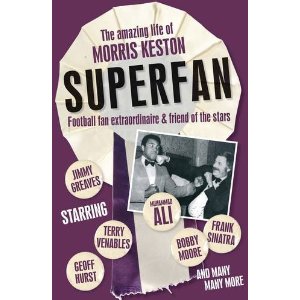
Morris Keston – Superfan

Imagine sitting, say, on a train or in a pub. You’re having a relaxing chat about football with one of your best mates. He’s brought along a couple of other people, you’re introduced and get on really well with them. The conversation and the beer flows, a good time is had by all. It’s a familiar enough story for most of us, one of the pleasures of being a fan, and something we share with long-time Spurs fan Morris Keston. The only difference is that he’s sitting next to Bobby Moore, who’s brought along half the 1966 World Cup squad for company.

Since he began supporting Tottenham Hotspur in the mid forties, Morris Keston has watched them nearly 3000 times. He’s followed them all over the world, whether it be a major final or a meaningless friendly, not that any Spurs match is meaningless for Morris. He curses his triple by-pass operation because it broke his run of watching every home game since the early fifties, but he missed just the one game.  Not only that, during this period he’s known most of the Spurs and England players and counts everyone from Moore, Greaves and Hurst through to Jennings, Venables and Crooks as personal friends. You name them, he name-drops. The book’s title is no publisher’s hyperbole – Superfan he most certainly is.

Most Spurs fans of my generation have probably heard of Keston. Often interviewed over the years, he’s featured in the Glory Game, Hunter Davies’ classic inside story of  the club’s season in the mid 70s, where he incurs the wrath of the board because the players chose to attend his ’67 Cup Final celebration party rather than the club’s official function. I always regarded him with a mixture of envy and resentment. Although I’d kill for the chance to mix freely with my heroes, as an equal, I begrudged the wealth that bought the travel, the parties and, frankly, access to the club. The reality is somewhat different. Keston is indeed a successful businessman but he started from nothing. Brought up in the Jewish community of the East End, he was evacuated during the war but suffered from malnutrition because the care he received was so poor, a not untypical story that remains largely hidden because it is at odds with the myths of Britain in wartime. His mother figured he would be safer in the comfort of his family, despite the rigours of the Blitz, so he spent the rest of the war in London, earning a scholarship and beginning a lifelong obsession with football. Leaving school at 14, he was sacked from his first job in a barber’s after he refused to work on Saturday afternoons. Eventually he got into the schmutter business, schelpping around the country for a fortnight at a time, taking in third division reserve games and any football that he could, and co-ordinating his return to London with the home fixture list.

There’s little more about these fascinating early years here, a shame in my view but then again that’s not the story. Or rather stories: this book is a series of entertaining tales and anecdotes about Keston’s relationship with football and the people in the game.  They are mostly Spurs related but not all. He knew directors and players at other clubs clubs including Chelsea and Stoke, and was personal friends with almost all the Boys of  ’66. Oh, and for good measure Frank Sinatra and Muhammad Ali. As you do.

Some remind me of those speech bubbles in Roy of the Rovers, where they begin by summarising the plot in case you missed last week’s episode- Voice in the Crowd – ‘Melchester have to win this 3-0 after the bruising encounter in Poland where Blackie was butchered then sent off’. Second Voice: ‘Yes, and the club will go bust if we don’t reach the next round and Roy’s girlfriend was run over by the team bus’. But never fear – like any good storyteller Keston is quickly off and running. It’s an easy, pleasant read that rattles along, and will undoubtedly carry you along with it.

His access was astounding. Moore, Hurst, Greaves and others regularly popped in for a for a cup of tea during the 1966 tournament. He stayed in the same hotels and travelled on the same planes when Spurs and England went abroad, and could get a seat in the director’s box for most games, the only exception being at the Lane, where the Wale family who ran the club in the 60s and 70s regarded him with suspicion. He sat alongside Terry Venables (Uncle Terry to his children), holding a seven figure cheque as they waited in vain for a call that would have transferred ownership of the club from Irving Scholar. Business and financial advice to a legion of players, chairing testimonial committees, negotiating transfers, all in a day’s work. And those parties.

Perhaps the most telling anecdote comes not from the author himself but from Graham Souness, who Keston helped out as a cocky 16 year old tyro. Now Morris had nothing to gain from that, no prestige or kudos. No one knew who the hell this anonymous apprentice was. He did so because he wanted to, because he cared about the club and the young players. And yes, the parties, but the players came round for a cuppa and a slice of his long-suffering wife’s apple crumble.  He entertained in his home, with home-made cooking, and although it’s not acknowledged specifically here, that’s the real secret of his appeal. He emerges not as a glory hunter but as a homespun, friendly and generous bloke, often a little star-struck, who is deeply in love with football and Tottenham in particular.

It will appeal more to the older Spurs fan and it’s great fun. There’s little analysis of how the game has changed over the years – that’s not the aim of the book. However, ultimately it’s a tale of a bygone, arguably better era, where you could turn up on the turnstile and get in, where players were open and willing to chat rather than be surrounded by a forcefield of PR and agents, where players understood that they and the fans are one and the same, not a different class.

The Amazing Life of Morris Keston – Superfan by Morris Keston and Nick Hawkins   Published by Vision Sports Publishing.

Look out for book signings with Venables, Jennings, Hurst and others in and around London


Add to FacebookAdd to DiggAdd to Del.icio.usAdd to StumbleuponAdd to RedditAdd to BlinklistAdd to TwitterAdd to TechnoratiAdd to FurlAdd to Newsvine

Spurs v Bolton. That Will Do

Job done: one down, two to go. On the morning after the afternoon before, the prevailing emotion is one of raw anticipation for the City clash but at the final whistle sheer relief was the only feeling on my mind.

This is Tottenham – we never make it easy for ourselves. I never for a moment believed that this would be the lull before Wednesday’s storm and sure enough Bolton proved to be well-organised and motivated opponents. However, we had enough space to do what we do best yet seldom passed the ball through midfield. Movement was stilted and we gave the ball away needlessly, time and again.

I didn’t gain the impression that the team were stage struck, immobilised by nerves. Our play was not so much hurried, rather it broke down through basic failings around poor control, especially from the strikers, and a lack of purposeful mobility, which meant that without a passing opportunity, we were often caught in possession.

If ever there was a match when Luka needed to buzz then this was it but he suffered the most. He worked hard but had little impact overall. In my preview I noted concerns at the form of our strikers and take no pleasure in having those confirmed. Pav was awful, consistently out-muscled by Cahill (if we need another centre half in the summer then we could do a lot worse than look at him) and his woeful control meant that we could never hold on to the ball whenever it was played forward.

Not Pav

When the chances did come, one early on and then later as Bolton were stretched, he either fluffed his lines or was in the wrong place, hanging back when he should have been hammering towards the edge of the 6 yard box. In the second half he applauded the Park Lane as they lifted his flagging spirits with the chant of ‘Super, super….’. No one had the heart to tell him that it was directed towards Gary Mabbutt who had been spotted in the crowd.

Defoe looked brighter in the second half and should not have been taken off. That shot that went just wide resulted from one of the very few passes ahead of him into a channel that he has received in the last three or four matches, but again he looked lethargic, the tell-tale sign of his anxiety being the  unwelcome return of his old fault, drifting offside.

The game began in an atmosphere more like that of a derby than a home encounter with Bolton. Not since the cup and league encounters in the same season in the 70s, when we were both vying for the top spot in the second division, has this fixture produced such a noise. They must have been shocked, they can’t be used to this.

Buoyed by the waves of support, we started well but it soon became apparent that we needed something out of the ordinary to break through. Which

The Statue Formerly Known as Kaboul

Huddlestone duly provided, a sumptuous first time clean strike rising all the way into the very top corner.  At such moments, this big ungainly man is transformed into the epitome of athleticism, body and mind in complete harmony. A electrifying experience, worthy of winning a match.

He was our best player because throughout the match he sought to be available for teammates and remained inventive, probing and passing short and long. One deft run from defence carried him past several tackles and set up the forwards, who once more let him down. Under pressure, Tom did not shirk his defensive responsibilities either and when he did make an error tried to rectify it as soon as possible. My main criticism of him in the past has been his lack of awareness and anticipation. He doesn’t read the game well. If the first yard is in the head, the message takes a while to reach his feet. Yet yesterday his positional play was sound and one occasion in the second half he set off to cover a potential gap before his stray pass had even reached the opponent. He’s not played well recently and in the past has hidden in the big games, so all the more reason to praise him now.

In the man of the match stakes, his goal would give him an edge,  such was its thrilling brilliance, but close behind were several defenders. King was unobtrusively dominant. There’s an economy of effort about his play these days. He sort of slides over the ground, a series of rapid short strides transporting him to wherever danger lies, then snuffing it out. This belies his strength: one consequence of his injury is that presumably he has plenty of time to work on his upper body. Davies tried to make him give ground, to be met each time with steadfast refusal. When players make the game look straightforward and effortless, it’s a sign of greatness.

Dawson again performed with admirable solidity, coming into his own in the second half when first Bolton pushed us back and then drove a series of  crosses into the box. But the big surprise, and very welcome it was too, was Kaboul. Formerly known primarily for his statuesque performances, in comparison making Hud look as agile as Beth Tweddle, he repeatedly stampeded down the right, showing pace, awareness and considerable skill. Towards the end he remained calm as the tension cranked up, timing tackles impeccably and using the ball with care. He and Lennon linked well in the short time they were together.

Last but not least, Gomes was decisive coming off his line and sprightly on it, on the few occasions that he was called upon to make a save. He makes better choices now between catching and punching, the majority of the latter achieving decent and safe distance as he emerges fearlessly into the ruck of bodies in front of him to clear the danger. His absence on Wednesday just does not bear thinking about, especially as he seemed to injure himself in a moment of needless effort. Let’s be honest, he can be a bit of softie, asking for the physio to come and tend to a speck of dirt on his gloves. I hope it’s not too bad – it was a good time to break up the play (added time had begun) and if he had been badly hurt, surely he would not have joined the lap of honour, although probably that would have disappointed his young daughter who he carried in his arms and who clearly enjoyed it far more than most of the squad.

If this central defence stays tight and taut, and does not get moved around by City’s pace up front, it provides our best chance of a point or three on Wednesday. They work tremendously well together as a unit and also enable the ball to come smoothly from the back.

We never do it the easy way. Bale and Lennon provided a taste of what we might look like with them both in the team as Bolton came forward and the space opened up, but a succession of good chances were squandered. In the end it did not matter but would have eased the suffering in the stands. The moment when the ball was swung wide to Bale who hit it first time across the box was breathtaking. Clearly a training ground manoeuvre.

Afterwards Dawson took the plaudits for Player of the Year. Waiting in the tunnel, he could not resist nipping out to get a better view of his highlights on the big screen. He’s terrific.

The lap of honour was a desultory affair, the player hidden under rainwear and apparently keen to get into the warm and dry again. No left-over goodies from the Spurs shop tossed into the crowd. No footballs booted into the stands. I’ve come to expect such corny theatrics at the end of the home season. No one was bothered – perhaps like us they had thoughts only for City.

Disappointed, But It’s All Down To Us Now.

In a few words, disappointed but philosophical. Hopes were high at Old Trafford but ultimately the forces of history – make that 67 away matches against the top four without a win –  were too powerful to overcome, despite our recent progress. And you know what I’m going say – 6 out of 9 points from the last three fixtures will do. And it is progress.

My rosy glow from That Week still lingers but it’s a touch brown and crinkly round the edges, because we did not give of our best on Saturday. Logically  it’s over-ambitious to believe that we could have taken United, but we’ve never had a better opportunity. I’m always uncomfortable with the familiar phrase, ‘I’d have settled for that before ….’. Whilst it contains the worthy truth of pragmatism, it also smacks of a lack of ambition, a denial of what it is possible. So I suppose two weeks ago I would have ‘settled’ for 2 wins from the last three games, but having seen two of them, I now know more about what is possible, and that is the phenomenal potential of our team.

On the field the game was won and lost down the flanks. It was inevitable that with so much attention and praise lavished on Bale from all quarters, ranging from this humble blog to the national media, he was due a poor performance. For once, Superboy was brought down to the level of the rest of us mere mortals. A reminder both to him and to his adoring Spurs public that he is young and inexperienced will do no harm in the long run but it was painful to watch. I suspect Rafael had a dose of kryptonite down his shorts.

On a few occasions he stood idly as the game passed him by, his lackadasical approach at odds with the fierce concentration of recent weeks. He was at his most culpable for Nani’s goal when he not only failed to track back but could also see his man ahead of him yet still failed to move. His failings were compounded by Assou Ekotto on the opposite side, where he was repeatedly caught out of position and whose decision-making was dire at times, leading to the vital penalty that broke the stalemate. United may have made their pressure tell as the game went on but that ill-judged and desperate tackle was the outcome of the pressure that Benny had been under since kick-off. It eroded his sense of sound judgement to breaking point.

However, it was more complex than both full-backs having bad games simultaneously. United played five across the middle. This meant that we were usually outnumbered 3 to 2 in the centre of the pitch and were also stretched by their two wingers, ultimately to breaking point. This latter led to Bale and Benny staying wide too.Whether this was their inexperience, made worse by Benny being out of his usual position, or from the manager’s tactical advice we will never know. It meant two things. One,without sufficient protection from Modric and Bentley, both were exposed one on one too frequently. Two, there was a gap between them and the centre backs. Time and again, United slid the ball into these channels for Berba or their ever-willing attacking midfielders. King and Dawson had to come across to cover, thus leaving space behind them in dangerous central areas. Wilson and Hud failed to slot into those gaps.

As a result, United had more room than they should have, and the fact is, it was no score at half time primarily because of their profligacy in front of goal. We have to defend as a team, and this was not the case on many occasions.

Fergie also became the first manager since Bale returned to the team to combat his attacking prowess. Valencia is hardly known for his defending but he can at least stay out wide and get in the way, and also he kept Bale occupied with his forward play. Then, with three in the middle Fletcher could ease across to provide the next barrier, and should we get through, the 12 year old full back is nimble and fast. Our lot didn’t help out much and seldom gave him a decent ball or an inside pass.

Fergie and Harry, the two wily, shrewd and battle-hardened campaigners up against each other, and Fergie outsmarted and outmanoeuvred Redknapp. There’s also an argument to say that we were hamstrung even before the kick-off. Redknapp took the risk of changing a winning team by bringing back Palacios and shifting Luka to the left. It did not pay off but frankly I would have done the same. The defensive cover Wilson offers would have been perfect, in theory, for Old Trafford where we would have less of the ball and hit more on the break compared with previous games. We should be comfortable with that formation.

As it turned out, Palacios was rusty after two games out and did not get going until the second half, whereupon he was moved to right back. There is less reason for this other change to the winning team. The reasons looked good on paper – BAE is fast, Kaboul isn’t, Nani likes to come inside onto Benny’s good foot. In practice, Benny played like a man in unfamiliar surroundings, which he was. With the lack of cover I have already mentioned, it fatally weakened the team. It’s been said that Harry rates Kaboul at right back. Kaboul himself this week says that’s not his position. This all smacks of serious confusion, and once again it is my solemn duty to point out that we have a quick international right back out on loan, a decision that to my mind is a massively wasteful use of our squad.

With Bale out the picture, it highlighted the paucity of our attacking options. It was wonderful to see Lennon again and he looked bright enough in short bursts but once on the field we did not give him the ball. Ridiculous. Defoe has not looked at all sharp since his injury, although the contrast between those United passes into channels and our failure to deliver anything much for JD to feed upon over the last few games could indicate a problem for us in the next few, vital matches. The joy of the derby victories has obscured this to a large extent, but it’s worrying.

King was again excellent, still a master of the penalty box but my man of the match was Gomes, not his busiest afternoon but he was impeccable. Otherwise, Hud was invisible and Modric poor.

One bright note was the way in which we responded when Luka switched to the middle and Wilson went to full back. The team immediately looked more comfortable and started to move the ball around with pace and confidence. United’s tactics were better than ours but they can’t be everywhere and we began to suddenly realise that we had space if we chose to use it. Nani’s great goal and Wilson’s foolishness put paid to that, but it shows that we do have a plan B if things aren’t working, something that could not be said with confidence at the start of the season.

And that attacking balance should be just right for Saturday. It’s in our hands, and I could not ask for more at this stage.