Spurs and The Sound of the Crowd

Even my wife noticed. “See your lot are doing what the manager wanted then.” I watched Thursday’s Europa League victory against Sheriff from the comfort of my sofa but the sound of the crowd came through loud and clear. The noise was generated primarily by supporters sitting behind the Park Lane goal, the traditional Spurs ‘end’, who had bought tickets in a section allocated by the club for the 1882 movement, a loose grouping of mainly younger fans who want to bring back the atmosphere to White Hart Lane.

This time last week I wrote about the unease with which an increasing number of Spurs fans express their support for the club. The loyalty remains but the ground can be deadly quiet at times, there’s anxiety in the air and despite our league position and highly promising squad, there is a puzzling but tangible undercurrent of dissatisfaction about the direction the team is taking under Villas-Boas.

I suggested that while there’s no single reason for this (high prices, changing demographics, Sky TV and unrealistic, barely achievable expectations caused by the dominance of the Premier League and Champions League are all factors), many supporters have developed a growing sense of alienation in terms of their relationship with the club. They feel distant, cut off and undervalued. The feeling is by no means unique to Tottenham, indeed it is a worrying trend that is spreading throughout the Premier League. It’s not something that you can grasp easily or put a name to, but it’s around and therefore all too real.

This feeling hasn’t stopped life-long Spurs fan, season-ticket holder and author Martin Cloake from regularly attending games. He was curious about what he calls the “new ultras”, groups of fans at clubs in Britain, Europe and the States who encouraged fellow supporters to gather and sing. Unlike traditional supporters’ organisations they prefer to remain anonymous and keep officialdom at arms’ length.

These groups manifest their allegiance in different ways. For many european Ultras, violence and protest is never far from their vocal support, others like St Pauli have political elements while others focus on the team. The Spurs response is the 1882 initiative. My son and I were present at a tiny bit of Tottenham history, the first gathering at a Youth Cup match at Charlton. I was probably the oldest one there. It was organised by Spooky from Dear Mr Levy and, well, I wasn’t sure at the time. Find Flav Bateman and co-conspirators at Love The Shirt but at the time, I heard the call because it was just a great idea. Come and sing for the shirt. No other reason, get behind the team and where better than at a youth game where we don’t know the players but they are Tottenham so they are ours.

Martin makes 1882 his starting point for a riveting history of Spurs’ fan culture in the last thirty years. I’ve called 1882 a movement but it’s not really. It has organisers but no leaders. It has no manifesto or political ambition, other than to increase support for the team and enable fans to enjoy themselves in the process. It’s inclusive – you don’t have to be a member of anything, you just turn up. It isn’t po-faced – I didn’t take my shoes off to support the lads and I didn’t sit down if I loved Tottenham because it would play havoc with my knees, but that doesn’t matter. Sing your heart out for your lads.

Love the Shirt is clear about one thing: their starting point is the long and proud heritage of fan culture at Spurs. They see themselves as carrying on that tradition, spontaneous and anarchic in the past, it’s just that now because of the alienation, it needs a bit of work. One particular aspect of fan culture that is unique to Spurs is how this heritage has persisted despite fundamental attacks by the club. Sound of the Crowd takes you through the scurrilous, sordid tale of how Spurs tried to emasculate loyal and loud support.

When I began supporting Spurs in the mid-sixities, the vocal and mostly younger fans gathered behind the Park Lane goal with away fans at the Paxton and other home support in the Shelf. Spurs must be the only ground where home fans share an end with away support. That’s bad enough but imagine turning up one season to find you’ve been turfed out of your end, your place without any warning. Yet this has happened not once but twice at Spurs. First, away fans were moved exclusively into the Park Lane, then in the mid eighties, the ultimate indignity or in my view betrayal when one close season executive boxes replaced the Shelf, the home of the most loyal and most vocal.

In Martin’s hands, this sorry saga becomes the tautest of thrillers, heroic resistance in the face of mendacity, intrigue and conspiracy. It’s essential reading for anyone interested in our history and the relationship between the business of football and supporters. The revurberations of that period rumble on. The atmosphere has never been the same but more than that, it opened wide that distance between club and fans that has never been closed. Football is about a sense of belonging and place: our fans have nowhere to go.

The supporters are happy, there’s an atmosphere at the Lane and the manager has a response to something he identified as a major impediment to the team’s continued success. Spurs reach the League Cup quarter finals and the knock-out stages of the Europa League. You would think there’s a message there somewhere.

So this is what the club do next. The West Ham game is category C and there’s no 1882 block. Big game, intense rivalry, the manager wants the fans to get behind the team, yet no discounts, no singing section, both dropped because THFC can make a sweet profit from a full house derby.

Stoke was due to take place on the Saturday after Christmas, 3 pm kick-off. Yesterday the club announced that it had been moved to Sunday, 4pm. No reason has been given and it’s not on Sky. Many fans make their Christmas arrangements around the fixtures. Even I for once, a bah-humbug bloody Christmas man if ever there was one, have organised things in advance. If I am to attend this match, and for the first time in a long time it has become an ‘if’, 12 people close to me will have to shift their diaries around too.

A twitter pal of mine, big Spurs fan, used to blog, goes mostly to aways as he lives in the West Country, young family so short of cash, planned a real treat for himself to be at this game. Now he can’t make it. He can get a refund on his match ticket but not his advance rail fare. He can’t be the only one. He’s disgusted and so am I.

Clubs should make a profit. These days with vast television and commercial revenue they can do so without it being at the expense of the supporters. If you’re puzzled as to what alienation is, it’s probably the feeling you get when you read the three paragraphs above. Things must change, not for my sake – I’ll be there til I die then scatter my ashes under the feet of the crowd after the match – but for future generations.

It’s not all bad. There is a once in a lifetime opportunity with the new ground to create an end and keep some prices reasonable. 1882 and the Trust are doing some fine work. The club must welcome not reject them. 1882 isn’t a separate movement, it’s us, you and me. It is inspired by our past and we are the future.

Sound of the Crowd by Martin Cloake is available on kindle from Amazon and on other formats from Martin’s website. Only £3.08 probably the biggest bargain on the net
Stubhub: Myths and Reality, Winners And Losers

Tottenham Hotspur and their kit sponsors Under Armour are currently running a promotion where fans can send in their photos and/or those of family and friends for inclusion on the tunnel wall at White Hart Lane. It’s a great idea – the last thing that the players see as they run out is the joy that they bring to their supporters, a reminder of when it comes to it, when they escape from the protected cosseted world of a modern Premier League professional footballer, they should be doing it for their fans.

Under Armour and Spurs use the language of loyalty to entice supporters. ‘Earn Your Spot’ at the Lane, ‘Love Your Spurs? Then Prove It’. ‘Your Spot In Spurs’ History is Waiting’. They understand the power and emotional pull of being a fan. They know what the club means to us but when it suits them, the relationship is only one way. We keep on giving, whether it be astronomically high ticket prices or creating an atmosphere as on Saturday or at most away games to lift the side from beginning to end. They reciprocate with all the depth of throwaway advertising copy about heroes and history.

When it comes to it, Spurs give us Stubhub. Tottenham On My Mind is part of Stop Stubhub, a campaign to end the club’s ties with the US based ticket reselling agency with the sole rights to sell on tickets for sold-out home matches that have been already been purchased by season ticket holders and members. The campaign by a group of Spurs writers and the Tottenham Hotspur Supporters Trust has gathered momentum over the last couple of weeks. The online petition is a simple way individuals can support us. Also, we have had positive feedback from other clubs and the Football Supporters Federation and Sharon Hodgson MP who has longstanding concerns about the operation of ticket resellers regarding concert tickets.

The Chelsea game has brought the issues into sharp focus, so let’s see where we are after a week and bust a few myths that surround Stubhub and the campaign.

First up: when the scheme was announced in the summer, many of us feared that by enabling ticket-holders to set their own price, this would lead to exorbitant profiteering far in excess of the wildest dreams of any street-corner tout. Spurs denied this would happen but the Chelsea game proved them totally wrong. Six days before the game, one pair of tickets was on sale for £1260. The day before, top price was nearly £1000 a pair and not one ticket was available for less than £95. Sellers sought a mark up of 10 and in one case 15 times face value.

We also said this opened the way for tickets to be bought purely for resale and profit. We have no way of knowing this to be true. However, we have heard of one fan who sold his tickets early on at face value plus just a recouping of the Stubhub fee, only to find them back on the site a few days later at a vastly inflated price. Buying to sell. So much for an honest price.

Is this what Spurs really intended? I can conclude one of three things. They could be staggeringly naive about the way fans buy and sell tickets, which from what little I know about the inner sanctum could actually hold water. It could be that they don’t care, which is to my mind negligent and shows their pro-supporter rhetoric to be the hot air it most certainly is. The third option is that they were prepared to tolerate it because they knew this is where Stubhub make their money. If Stubhub see the Spurs contract as attractive for this reason (the higher the selling price, the higher their fee), they are going to bid top dollar for the rights. So in this scenario, Spurs turn a blind eye while Stubhub rub their hands as fans are ripped off.

I don’t know which aspect of this deal infuriates me most: a company that ruthlessly exploits the low supply/high demand equation at Spurs with a popular, well-supported and achieving side that has a small ground, or the club that is apparently prepared to condone this sorry state of affairs.

What we also found out this week is that there are alternatives. Stubhub’s deal with Celtic does not allow reselling or tickets to be listed above face value. Parkhead is much bigger than the Lane, so Stubhub had less bargaining power. Spurs could and should have been stronger. The other alternative remains of course the ticket exchange, either in the same format as existed BS (Before Stubhub) or in a modified format.

The old set-up was open to members only, precisely those people who ‘love their Spurs’ and have paid up front to improve their chances of getting a match ticket. A few people have said, as did a commenter on last week’s Stubhub post, that it’s only a small proportion of tickets, less than 1%. But at least members would have had a chance of getting one of those 226 that were on Stubhub last week, and at face value rather than going to fans who could justify the huge premium. It’s expensive enough and hard enough to get a ticket in the first place. A benefit of membership has been removed but the price hasn’t fallen.

Last one: who could begrudge a fan who makes a few extra quid from selling his ticket? If someone is fool enough to pay, sod ‘em. Probably some stupid football tourist anyway.

There’s nothing about individuals in my writing on this topic or in the campaign statement. Do what you like with your ticket, although in reality you can’t because of the small print in the terms and conditions that means you can’t in theory give it to your daughter, son or mate but you can sell it on at a vast profit provided you go through Stubhub. The campaign is focussed solely on the club for allowing this state of affairs and to work with them to suggest an alternative where fans can sell on unused tickets without taking a loss.

If you are selling to pay for your season ticket, the club need to know about the absurdity of creating prices that force some people into this option. Finally, the sellers on Stubhub weren’t just making a few quid, they joined by unscrupulous resellers buying and selling purely to make a profit.

This week the club announced reduced price tickets for the Europa League and the League Cup, a significant success for the Trust who have lobbied for change on behalf of supporters. It shows that the club may be sensitive to feedback after all. Stop Stubhub has a realistic target of setting up an alternative for two years’ time when the present contract expires. Consistent consultation should become part of the fabric of the club. The new stadium is not so far away. More seats changes the whole balance: they will need to work harder with us fans to fill the ground. Now’s the time to continue the process that the revamped Trust have begun because Spurs will be making plans now. Remind them that they need us.

For more on this, read Total Tottenham and the Fighting Cock Sign the petition now: Stop Stubhub 

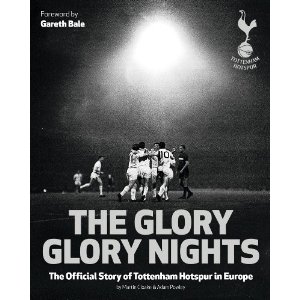
The Glory Glory Nights by Martin Cloake and Adam Powley

Order this book. As a Spurs fan, you must, or else drop so many hints to your loved ones that you wake up on Christmas morn to find ten coffee-table book sized parcels under the tree. Between now and then, listen to the radio, read the blogs, watch TV and make a note of how many callers and pundits say either that the Champions League is vital for financial survival or that finishing fourth defines success.

Then read the Glory Glory Nights. Take a quiet moment, all to yourself. Turn the pages slowly. Take in every detail of the photographs that cover every page. Read the text that describes the exploits of bygone times, of heroes whose time has passed but who will never be forgotten by those of us who ever seen the all-white strip with the proud cockerel.

Now close your eyes. Under lights, your world is spread before you. Nothing exists beyond the shimmering bright rim, not for 90 minutes at least.  Close your eyes and feel the chill in your lungs, the breath billowing steam from 50,000 pairs of lungs rising high into the dark north London sky. Feel the Lane shaking beneath your feet. This is what Europe means to Tottenham Hotspur. Glory. It’s what football means. Read and marvel at the glory of those european nights and anticipate nights to come.

This loving history takes its title from a book written in the mid 1980s and commissioned by Irving Scholar, which co-author Spurs blog 87Martin Cloake wryly describes as the best thing he ever did for the club. It keeps two key elements of the style too, the liberal use of photos and incorporating quotes and headlines from the following morning’s backpages, which gives a sense of time and place. As Martin says,  until comparatively recently fans relied on the papers for an account of the match because there was no other way of finding out what happened. Even the radio was confined to the bigger ties.
However, this is no mere revamp. It stands up in its own right as a tender tribute to a glorious past and brings out the enticing beauty and wonder of this entralling, all-consuming passion. The unobtrusive but insightful text sets the match reports, one for every single game, in context. Then, it allows the reader to explore the story for themselves as it unfolds. The images are stunning, chosen with care by Doug Cheeseman with an eye for the drama and passion the glory glory nights inspire. While the book rightly gives due regard to our modern successes, the black and white images are irresistibly evocative. Fans with rattles and cut-out cups gathering at the gates, players celebrating together and plenty of goals frozen in time. Mixed in is the surreal too; the Double team on an open-top bus with a man dressed as a clown clutching a stuffed monkey toy, Peters leading out the team past a row of giant Romanian urns in the tunnel or a man dressed as an ‘Aspurnaut’ parading round the pitch in the early 70s.

As a kid I had no doubt as to the meaning and significance of Spurs in Europe. My glory years began in the early seventies. We may have put 9 past Icelandic part-timers Keflavik but I knew I was part of a great tradition, the first British side to win a European trophy. Erratic and underachieving in the league (nothing changes…), play in all-white under the lights and we were transformed, a team that could beat any side in the competition. Frequently the glory glory lifted us to new heights, and to see Spurs win the UEFA Cup on our own ground not once but twice will live with me forever.

The book does my memories justice. There are extensive interviews with managers and players. In an age when we tend to think of players as primarily motivated by personal glory and vast wads of cash, it’s refreshing to see that they too bought into the myth. Europe was special to them and still is. The book avoids falling into the trap of becoming just a nostalgia-fest by giving due prominence to our remarkable Champions League run. Gareth Bale and Michael Dawson both fully recognise the magic of the Glory Glory Nights and were inspired by them. Make no mistake: those games away and home versus Inter or the astounding away victory at Milan rank up there with the best of the best.

European ties were magical affairs in far-off, mysterious places. It’s not that long ago, for example, when Spurs would kick-off not having seen their opponents play before. They had to think on their feet, changing tactics at half-time in order to cope with the unknown.  And Spurs were pioneers; the Cup-Winners Cup in 1963, the first to win two trophies, the first fans to fly abroad to watch their team. It tells the story of why Spurs and Europe have a special relationship, the tale of what it means to be a Spurs fan. Simply wonderful.

The Glory Glory Nights: The Official History of Tottenham Hotspur in Europe by Martin Cloake and Adam Powley published by Vision Sports. Click here for a special site to see inside the book

Look out for an interview with Martin Cloake, coming soon.

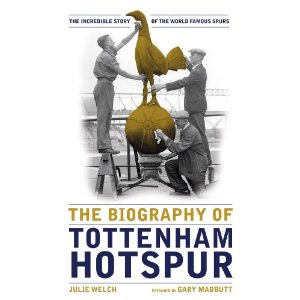
Review: The Biography of Tottenham Hotspur by Julie Welch

Why do we do it? The heartache and pain, the time, energy and money, the fury and frustration, all expended in support of a cause over which we have absolutely no control or influence whatsoever. Because we support Tottenham Hotspur. Read Julie Welch’s lovely, insightful and touching book and you will be inspired all over again.

More than just a history, The Biography of Tottenham Hotspur reaches into the heart and soul of the club. What marks out this club from most others is that it stands for something. Danny Blanchflower’s  famous statement that it’s not just about winning, it’s about glory and doing it in style, isn’t mere aspiration but articulates explicitly a culture and identity that dates back to the origins of the club in the 1880s on Tottenham Marshes.

For Tottenham Hotspur, it has to be good football, creativity and innovation. The Spurs Way is the right way. The pass and move approach lauded at Barcelona brought Spurs a league title in 1951 when Arthur Rowe called it ‘push and run’.Back in the early 1920s another great manager Peter McWilliam defined his tactics in exactly the same way. The mixture of flamboyance and exasperation, the sublime and the erratic that is familiar to readers of this blog would be instantly recognisable to Spurs fans of past generations.

As befits a biography, the book describes the club’s history while allowing the character to unfold and open up. Like Spurs, the Spurs blog 86writing is easy on the eye and draws you in. This is no dull history textbook. Rather, Julie is a storyteller, engaging and curious. She communicates her passion without allowing her voice to intrude or detract from the telling of the tale. It’s a measure of her skill and dexterity that she makes the journey from Tottenham Hale through the industrial landscape that covers the old marshes to our first pitch sound enthralling. And she’s not averse to the occasional gratuitous dig at our rivals: after all, she is a lifelong fan.

She freshens familiar tales such as the success of the Double side, the Nicholson era or the sordid conspiracies that brought the Gunners from Woolwich to north London, and by placing them in the broader context of the club’s culture and origins, enables the reader to look anew at more recent events that we’ve lived through. It kind of sneaks up on you, involving you in the story then in a couple of killer sentences nails its wider significance like a fine historian should. Be warned – set aside some time when you first open the covers because you’ll want to keep the pages turning, just to see what happens next.

Not all of which makes for pleasant reading. The late eighties onwards was a sobering read. Gross, Graham and Francis, and the inglorious reigns of Spurs idols Ossie Ardiles and Glenn Hoddle, goodness me how dispiriting they were, but as the current side teeters on the brink of new glory or yet another near-miss, it brings a vital sense of proportion. Being a fan isn’t about instant gratification. Read it and I defy you to rant on about the all-consuming Champions League.

Nothing really changes. Around the turn of the century the club was run by two dynasties of Jewish businessmen. ‘Up and coming club taken over by wealthy businessman in order to enhance his prestige. Club moves ground’ – 1890s or early 21st Century? ‘Club buys Scots, leads to great team’ – 1890s or 1950s? ‘Finances restricted by ground improvements, team slumps only to be rescued by a saviour who changes fortunes totally’ – that’s just page 58.

This is an enduring love affair. For better or worse. In any long-term relationship, there’s some give and take, although I suspect we supporters have put more into the relationship than the club has given back over the years. Through the anger and disappointment,  having been let down so many times, it’s worth it because when she touches me, nothing else matters. It’s a passion that makes us swoon and shake with unbridled joy, an experience like no other. Share that with thousands of others at the Lane and these are the unforgettable moments that make life worth living.

By the time you reach the end of the Biography, you feel closer than ever before to the club.  You will know more about the club and about yourself. About why you do those crazy things to watch a football team. About what it means to be a Spurs fan – about flowing football, pleasing the fans, about good football. About what it means to be you.

Look out for an interview with the author Julie Welch, coming soon.

The Biography of Tottenham Hotspur by Julie Welch is published by Vision Sports