If Spurs Were United, We’d Never Be Defeated

Tribalism is the essence of being a football fan. United in support of our obscure object of desire, Tottenham Hotspur Football Club, we pledge everlasting love and set aside other relationships in preference to the one that truly matters. We have our colours, our temple of worship, our rituals. At games or out and about, I strike up conversations with perfect strangers because  they are navy blue and white. The Lane, just before kick-off, I shake hands with people I see more frequently than I do most of my friends and relatives, people with whom I feel a deep common bond in a place where I am more at home than anywhere else on earth. I don’t know their surnames, where they live, what they do or think, anything of any significance, yet none of this matters, because we are Spurs.

Scratch the surface, however, and deep fissures shatter this fragile unity. At least, that’s the conclusion I’ve reached after reflecting on how this blog has dealt with some of the major issues that face the club. Two topics have produced more comments than any other articles that I’ve written over the past couple of years, namely Stratford and the Madrid tickets.  Not necessarily more views than other pieces, in fact ironically my most read article is an innocuous match report on this season’s away game at Everton that was picked up by Everton sites and messageboards, Surprised and pleased at my even-handed approach, they extended fraternal greetings as fellow football supporters and wished us good luck in Europe.  It’s the reaction that has been markedly different, revealing deep divisions not just on the topic itself but, significantly, on the very nature of being a Spurs fan.

There are several pieces on Stratford; the comments sections on a couple are not for the fainthearted. The single biggest issue to face Spurs since the club was in deep financial distress under Scholar was bound to provoke a meaty debate. Last week I offered some constructive criticism of the ticket office’s appalling treatment of fans trying to buy Madrid tickets but the fascinating comments section, which as a regular correspondent noted somewhat disconcertingly for an author was as good as the article, revealed distinct differences of opinion about the solutions.

To be very clear – keep the comments coming. I read them all, often respond and don’t censor or delete them. If you take the time and trouble to not only read the blog but also comment, I’m genuinely grateful. Interaction is what blogging and the internet is all about.  This piece is not about who is right and wrong. Perhaps I was being naive but the ferocity with which some people got stuck into to fellow Spurs fans did take me by surprise.  With the OS, for example, I’m anti-Stratford but understood the concerns of people who see it as the way forward. The fairest way of distributing tickets for big games is via the loyalty points system, not perfect but the least worst. However, several people rightly pointed out that if they have a membership, they are just as entitled to go for the tickets as anyone else. In fact, a wider distribution encourages a broader based support.

In the end, we’re all Spurs, right? Wrong apparently. As the debates raged, the nature of a being a fan came into dispute. Are people who have been attending games for many years more a fan than others who come once or twice a season? Younger fans in this equation will always be at a disadvantage because of their date of birth. Family circumstances and money prevent an increasing number of supporters from coming to see the club they love. When I was in this position for a few years, I remember listening on the radio to a home game when we were near the bottom of the table and physically being in contortions of agony until victory. Would I have been more of a fan if I had been at the ground? Yet who can deny the phenomenal dedication of  those who give up their time and money to follow them around the country. Some tried to find the coefficient between the two. With Stratford, both sides saw themselves as defending the club’s future, both with very different views as to how this might be achieved.

To repeat myself, I’m not talking here about who is right or wrong about Stratford or ticket distribution: I’ve written about that elsewhere, feel free to comment. Rather, I’m taking this as evidence of divisions within Spurs fans that are exposed whenever problems arise. I’d say that the one thing we agree about is that we get behind the team, but the fact is, there’s disagreement there too, the two extremes being those who cheer on regardless and those who feel justified in complaining openly by booing or abusing our own team and/or players. Most of the time it’s a comforting and humbling experience to be part of the worldwide Spurs community. Sometimes, that comfort is an illusion.

Ironic that I’d been mulling this over in a week when a 4% rise in season tickets has been announced. I’ll pay of course, and Daniel Levy knows I will. More importantly, he knows that if I don’t then someone else will. For the record, my ticket has gone up by over 6%. Increased operating costs are the reason, apparently. I work for a charity. We have cut our costs as much as we dare because of the current climate, but Spurs are seemingly immune from the pressures we all face because the law of supply and demand has come down heavily in their favour. Increased revenue from Europe and TV ( did I see an increase of over 40% mentioned?) has not been reflected in concessions to the fans. There’s no moral imperative to consider the loyal fans – but again, I’m being naive. Levy knows we are divided. I’m reminded of the industrial disputes of the 70s and 80s. Two factors overruled everything else – the unity of the workforce and how real was the possibility of a strike. Levy knows our weaknesses and will exploit them.
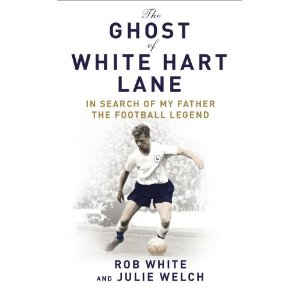
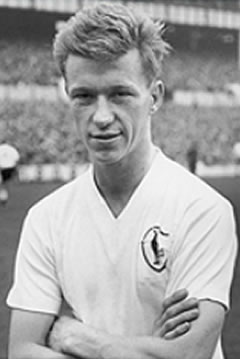
John White: The Ghost of White Hart Lane by Rob White and Julie Welch

On my daughter’s mantelpiece sits a photo of her son, then aged about 3, walking along the beach with his father. Taken from behind, they are unaware of the camera’s presence. Their stance and gait are identical. Size and stature come from shared genes, the rest, the bit that matters, just happens.

For Rob White, denied the chance to bond with a father he never knew, there’s a gaping hole where that bit that matters should be. The story of his dad, John White, the former Spurs and Scotland international who rose from working class poverty to become one of the most distinctive players of his generation before dying in a tragic accident, is dramatic and fascinating in itself. Yet this is no ordinary biography. His story is interwoven with Rob’s search not just for his father’s ghost but for his own identity.

Rob was born a few months before White was fatally struck by lightning, sheltering alone under a tree on a golfcourse during a thunderstorm. White was in his prime: 26

The Ghost of White Hart Lane

years old, a Double and Cup Winners Cup behind him, the man around whom the incomparable Bill Nicholson intended to rebuild the ageing Tottenham team.

The touchstone for Rob’s quest is a dusty box tucked away at the back of the loft. As a boy, he scrapes off the dirt and prepares himself for the wonders within, like an archaeologist about to enter a hitherto unknown Egyptian pyramid. Inside, he sifts through the cuttings and medals, tries on his father’s tiny boots, size six and a half. Tries to conjure up his father’s spirit.

The search continues into adulthood. There’s no shortage of material as White was well liked and respected by his fellow professionals. Much is made of the camaraderie and team spirit of the Double side and he is still deeply mourned by those who knew him in the game. His close friends Cliff Jones and Dave Mackay in particular remain bewildered by his absence.

Little wonder White was so popular. On the field, not only was he supremely talented, a superb passer of the ball with excellent control, he was also tireless and unstinting in his work on behalf of the team. From boyhood backstreet kickabouts to the great stadiums of Europe, you underestimated him at your peril. This small man had the heart of a lion and lungs to match, with a phenomenal workrate. He made himself constantly available for his teammates for Spurs and Scotland, ready to pick up a pass and move it on. To his opponents, they simply could not get near him. He appeared and was gone again in the blink of an eye, hence the nickname the ‘Ghost’.

Despite Welch’s meticulous research and consummate storytelling, there’s a sense of never quite defining the man. Contradictions appear. Diffident in company, he was also an inveterate joker and confident in his ability. This little boy lost in the Spurs dressing room when he came to London from Falkirk in 1959 could easily delight crowds of 65,000 at the Lane, 160,000 at Hampden Park, yet each winter, after Christmas, his mood and form dipped until the spring.

This may be because White, a loving father and husband and good friend to many, always held something back, a reserve shaped perhaps by self-protection at the loss of his own father at a young age and of a series of rejections in his formative years because people were unable to see beyond his small stature. However, his childhood in a caring extended family dominated by matriarchal figures instilled a powerful determination, epitomised by a ferocious desire for supreme fitness. He played football all the time, in the back yards and on the green, challenging his brothers, both of whom good good enough to play professionally, to races and keepie-uppys, delighting in the fact that he beat them every single time.


John White - Spurs and Scotland

Along the way there are solid gold nuggets of Spurs history. The Double, John’s rise to prominence and his growing influence is well chronicled and there’s a touching piece on Tommy Harmer, whose talent deserved more but who peaked in the mid 50s, between the great Tottenham teams of Push and Run and the Double. Blanchflower’s status and role in the club is perceptively defined, as is his decline, memorably instanced by the image of White steaming past him on a pre-season training run.

As with other biographies from this era, there are frequent reminders of how much the game has changed. White played for Spurs on a weekend pass from the army as he had to complete his National Service. The players lived up the road from ground. When sacked as manager to make way for Nicholson, Jimmy Adamson had been at the club for 51 unbroken years. White’s transfer was facilitated by a Scottish journalist, Jim Rodger, who took no fee – all he wanted was the scoop.

However, in other ways, at Tottenham nothing alters – Blanchflower, arguably the most influential midfielder in our post-war history, dropped for not fulfilling his defensive duties. The team criticised post-double because they were ‘only’ third or fourth.

Admirably the book leaves the reader in no doubt as to White’s ability. The only modern comparison is made, surprisingly perhaps, not with a midfielder but with Dimitar Berbatov, who like White has a picture of the game in his head and can anticipate several passes ahead. In my mind’s eye, the similarity with Luka Modric is inescapable, both small but tough, tireless with superb touch and almost prescient vision.

All this information and more unfolds for Rob as he grows up. The most poignant passages concern his search for connections with his father as a child. He watches the few snatches of film available of John in action, then convinces himself he runs in the same way as he studies his refection in shop windows. Mackay takes him under his wing. He’s allowed on the team coach, into the dressing room, not just to hear about White’s exploits but to experience the smells and sounds of the dressing room, the pre-match tension rising as kick-off approaches, the evocative clatter of studs on concrete as the players run out.

It’s comforting for a child to have so much information about a lost father. However, this is tempered with unease and frustration as the man eludes his grasp, walking beside him through his life yet when he reaches out to touch his presence, there’s nothing there, a ghost.

Rob is still searching into adulthood. He hears the stories, even sees a medium. His family are there for him, yet adulthood brings initiation into family secrets. Far from offering resolution, there is deeper mystery in the news of a half-brother from a fleeting teenage army relationship.

My first Tottenham game was in 1967 so I never had the privilege of seeing White play. Talk to fans from the Double era, they laud the greats, Mackay, Blanchflower, Smith up front, then invariably turn to the best footballer of them all, ‘John White, now there was a player’, and with a gentle shake of the head, tail off into wistful silence. The least known of this team, the book is a fitting tribute to his supreme talent and should bring him the recognition he deserves.

You find the man, however, in Rob White’s disarmingly open and honest search for his identity. His loss is laid bare as he works through familiar grieving patterns. Anger at what he can’t have. He can’t know his father, turn to him for advice or, as an adult, give a him a Christmas present. Seeking information, from people who knew his dad, family, press cuttings. Agonising over the might-have-beens and if-onlys. On the day of his death, if Jones or Jimmy Robertson had accepted his invitation in the dressing room after training to play golf, if Jones had run back with his trousers that he accidentally picked up, thus delaying him for precious moments…

This excellent book succeeds in being both a fascinating portrayal of a fine footballer and a profound, touching insight into how our origins shape our sense of self, of interest to all fans whether they support Spurs or not.

Rob’s a season ticket holder in the Park Lane now. I hope he enjoys the game and the club still. One wonders if, perhaps in the intensity of European games under lights in this venerable old ground, he catches a glimpse in the corner of his eye of the spirit of a true Tottenham great, his father. For me, there’s only one more thing to say about this book: having read it, I ache to see John White play.

The Ghost of White Hart Lane by Rob White and Julie Welch      Yellow Jersey Press

Spurs – What’s The Point of a Football Club?

We the fans clasp the precious heritage and soul of our club in our hands. In a mixed up muddled up shook up world, we and only we provide continuity and unstinting commitment. Players and managers come and go. They may kiss the badge or effectively trample it underfoot, we hold it close to our hearts. We will be back next week.

In the build-up to big games, the media turn to us to validate the significance: the atmosphere builds, the ground is rocking, the town is alight. Not literally, presumably. Yet in the cold light of day, we will be told that football is a business. Be realistic – make money in order not only to be viable but also to compete in the quest for the Holy Grail, the sacred, some would say mythical, Next Level. No one is quite sure where that is or how to reach it, but we’re on our way. Teams field weakened sides in cup competitions because the bigger prize is to climb one or two  greasy steps to mid-table mediocrity. Supporters kvetch about ticket prices. Crowds drop but that’s fine, as long as the drink is flowing in the corporate lounge. Success on the field is no longer the only goal. So what, exactly, is a football club for?

Until comparatively recently, there was a relatively straightforward answer. Each club was a private company run by a small board of directors who certainly controlled and probably owned the vast majority of the strictly limited shares. Well over 90% of the income was generated by fans coming through the gates. Those gates may have been ancient and rusting but the directors didn’t to need waste money on oil, let alone on any facilities inside the ground because the fans would come to see their team regardless. More success on the field, the fuller the terraces.

In the last 25 years, the number of stakeholders in the club, any club, has increased. The main newcomer is the shareholder because most of the big clubs are now public companies. Spurs were forerunners as Irving Scholar made us the first club to float on the Stock Exchange.

Now, when key decisions are made, as with any public company the interests of the shareholders must be taken into consideration, and that means profit. The composition of the board is different too. Directors are co-opted for their skills and influence. Most significantly, Tottenham Hotspur PLC is owned by ENIC, the English National Investment Company. The clue’s in the name – they need a return on that investment. Finally, football clubs still attract overbearing egos to their cosy boardroom, hoping to bask in the particular fame and glory that only our wonderful game can bestow. However, they are also doing what they do best, nose down on the trail of the filthy lucre. Alan Sugar is hardly revered for his achievements at Spurs, but despite a lack of success on the field and below capacity crowds, when he cashed in his chip he trousered a profit estimated to be anywhere between £25m and £35m overall. He saw an undervalued public company with assets and the capacity for growth.

Other stakeholders have elbowed their way into consideration. The F.A. always had a role in governing the game but it has been unceremoniously shoved aside by the all-conquering Premier League, whose aim is to generate as much money as possible for its members, rather than for the game as a whole. Sky TV is so close to the Prem, if we kicked the League up the backside, Murdoch would get concussion. The very fixture list is governed by their requirements. It’s the same in Europe. After a make-over, the revered European Cup, the ultimate prize, now rewards league failure with a lucrative and unnecessary group stage, so everyone has more chances of thrusting their noses into the trough.

This brave new world has distorted our priorities and our language. In the past, defining ‘success’ was easy enough – win something, if not, finish as far up the league as possible with a decent cup run thrown in for good measure. Now, success can mean other things. The prospect of winning a trophy, certainly of advancing as far as possible in a cup competition, is secondary to Premier league survival. The surprise is not that sides field a weakened team, it’s that anyone is surprised. Finishing fourth in most sports is finishing nowhere. In football, it opens the door to Aladdin’s cave. We fight, mewl and screech in the pursuit of also-ran status.

These issues apply to most top clubs in the country but at Spurs, recent events have thrown them into sharp relief. Setting aside the rights and wrongs of a move to Stratford, the debate created lines of battle. The Olympic site was the best decision in terms of the club’s finances, according to the board. Increased capacity and better infrastructure at an allegedly lower price was in the best interests of the club, as Daniel Levy put it. Many fans thought differently – it wasn’t in their interests, playing far from home, in another team’s territory in fact. Many would have gladly sacrificed the sanitised plazas with their cafes and leisure park and a trip on the Jubilee Line for a proper rebuilt football ground in our spiritual home, no matter how difficult it was to get a decent pre-match cappuccino.

In the long run, so the argument went, financial stability and  increased income benefits us all because this can be re-invested in the team. However, it also means better dividends for shareholders and the club is a far more attractive prospect for potential buyers, should ENIC wish to sell, bearing in mind that the object of any investment company is to maximise the return on its investment.

In the debate, the name of another stakeholder was taken in vain, the local community. In the desire to get planning permission for the NDP, much was made of the improvements it would bring to a run-down area of London. As soon as that permission was granted, the people of Tottenham were unceremoniously and ruthlessly jettisoned, having served their purpose. Now all that mattered was money.

This conflict has always been there. Once it was a walk or bus-ride to the club for most spectators. These days, fans come from far and wide and whilst they bring business to local traders, they also bring disruption and traffic chaos. The anti-Stratford lobby looked to local MP David Lammy for support but he has a duty towards his constituents, not the likes of you and me. I was talking to a Spurs fan who has lived in the area for many years. Despite the much-publicised community work and appearances of the players in worthwhile local projects, he is scathing about their lack of genuine commitment to N17, saying the club has little or no connection to the locality and no genuine interest in the issue.

I believe the club has a duty to the community of which it is a part, regardless of whether it increases gates. The activities that do take place are valuable and should be extended. There’s the education project that brings football and education to local children and to those with disabilities, plus charity donations and the support of a football team for homeless people.  Long may this continue, and should become a primary goal of the club, one of the benchmarks against which success can be measured.

My definition of success for the club is an organisation that has sufficient financial stability and the resources to function at the highest level of performance. Finish as high up the league as possible, and win something. This is not the be all and end all, however. The pursuit of profit and success on the filed at all costs must be mitigated by a sense of responsibility towards two other key stakeholders, the fans and the local community. If this means redistributing a proportion of our income or keeping a lid on ticket prices, then thinking twice about paying vastly inflated salaries, so be it.

Football and footballers are routinely vilified as poor role models for the young people who are in thrall to its charms. Watching my 11 year old grandson on a Sunday, their enthusiasm is infectious, However, there’s this one kid who hurls himself to the ground in agony if an opponent so much as touches him, others who mimic precisely bizarre gestures of open-palmed innocence if the ref blows against them. Ashley Cole brings a rifle to his workplace yet he’s free to play a few days later because it’s a vital game, one where one manager refuses to follow the rules that apply to all his peers and talk to a camera.

Football has a different, better message to deliver. Clubs should embrace the opportunities they have and exercise some social responsibility to their fans and their community and if this means success on the field or in the boardroom is harder to achieve, that’s fine. In fact, the League is so awash with money, this would cost but a fraction of their resources. Clubs can be role models too, of a organisation that understands its priorities, sticks to decent values and does the right thing. That would make us feel more part of what’s going on and ensure the club’s future by looking after the people who truly matter.

Add to FacebookAdd to DiggAdd to Del.icio.usAdd to StumbleuponAdd to RedditAdd to BlinklistAdd to TwitterAdd to TechnoratiAdd to FurlAdd to Newsvine

If You Know Your History – Spurs Players Score Four and I Was There (Mostly)

One of the good things about not having a crowded fixture list this season is that when we win, there’s more time to bask in the warm nourishing glow of victory. It’s a great feeling, something which Spurs fans have frankly not been accustomed to over the years. The reservations expressed in my match report about tactical weaknesses somehow ebb away, at least until Matty Taylor bangs one in from 30 yards against the run of play on Saturday, and thoughts turn to past glories.

Meticulous post-match historical research (chatting in the car on the North Circular on the way home) came up with 3 other occasions within the forty year timespan of my support for our beloved Spurs when an individual Tottenham player has scored four: Martin Peters away to Manchester United, Colin Lee in the famous 9-0 versus Bristol Rovers and Jurgen Klinsmann away to Wimbledon. Ironically we forgot the one previous occasion when all three of us had been present, Berbatov’s four against Reading in a mad 6-4 win.

I was present for four of the games, Wimbledon away preventing my nap hand. One thing they all had in common was that they were not exceptional matches. It’s the feat of four that remains in the memory, not the quality of the performance or, particularly, of the goals themselves. Against Burnley we did well, exceptionally so in patches, but we’ve played better and lost.

I saw Peters score all four goals in a 4-1 win in 1972 from the enclosure at Old Trafford. Many clubs had a standing area running the length of the pitch, like the one in the old West Stand at White Hart Lane, the space now occupied by the West Stand Lower seats. In those days you could stand there in safety at away grounds, getting a bit of stick but nothing serious. Liverpool, Old Trafford, Derby, even Highbury and, to truly demonstrate how times have changed, Upton Park, where in the early 70s I and other clusters of Spurs fans openly celebrated a 2-1 victory and lived to tell the tale. Then as now I preferred the view from down the side but also it represented a refuge from the increasing violence in the home and away ends. I watched the hoolies get stuck in from a safe distance.

We were three up well before half time but the only goal I can recall is the fourth, a header at the Stretford end I think. Peters was famed for ‘ghosting in’, in fact a simple manoeuvre that we now expect as routine from midfielders, coming late into the box, and he rose unchallenged to score. I vividly remember the total silence; the ground was stunned. On MOTD you could hear a solitary person applauding. It was me, stood near the cameras.

The 9-0 against Bristol Rovers was another odd one. We expected to do well in what was then the Second Division but this stroll was so easy it was unreal. Basically, everything worked. Again I don’t recollect any stunning football to break Rovers down, merely a succession of crosses converted by Colin Lee on his debut, plus three from Ian Moores. Two men less likely to score seven between them have seldom appeared together in the same Tottenham team. Lee was a round shouldered un-athletic signing from Torquay, willing but often with the touch of a full back in front of goal. Which he duly became as his scoring powers waned. Centre-forward to left back, a remarkable change of position.

Moores meanwhile enjoyed his day, although even when he scored a rare hat-trick, (or as time went on, scoring was rare full stop), he found himself out of the limelight. A signing that epitomised the way our standards and expectations had fallen, Moores was a limited target man, memorable for his beard but sadly not his talent. Think Rasiak without the skill….

Coming up to date, Berbatov’s four came in a crazy game against Reading, lots of fun in the total absence of any competent defending from either side. One goal stands out. In a crowded box, the ball dropped vertically from a great height and Berba, back to the target, swivelled to volley home. A dream goal scored with the lazy insolence of the most skilful player at Spurs since Gazza.

I’ve left Klinsmann to last not just because it was the one that I did not see. The 97-98 table shows that we finished a modest 14th but that does not tell the full story of this desperate season under Christian Gross. We went into this tricky away game, the penultimate fixture, teetering precariously above the drop zone and Wimbledon were hard to beat. Well, in fact, just hard, and they approached this match like the school bully lurking outside a sweet shop for passing year 7s. Defeat and subsequent relegation was the terrifyingly real prospect.

I listened at home on the radio, pacing the floor and cheering every Spurs move. Winning 6-2 was a bonkers result, given our pathetic season. Watching MOTD, the players congratulated Klinsmann, strutting around full of themselves. Even Saib had a good game, that’s how odd it was. Jurgen returned late in the year to save us all and he took his chances in the manner of the true master he was, but I still slightly resent the cockiness of his teammates. You were awful that year, lads.

Add to: Facebook | Digg | Del.icio.us | Stumbleupon | Reddit | Blinklist | Twitter | Technorati | Furl | Newsvine