I Couldn’t Handle It. We Were Winning

‘Oh, is there a match on darling?’ It’s sweet of Adriana to sound even vaguely excited on my behalf.

It’s the first time today that I’ve thought about football. I’ve known for a while that I would be working late so I put it to one side, and anyway sitting next to Adriana for the afternoon’s meeting is distraction enough.

‘No it’s fine, just fine’.

‘Are you sure? I don’t mind, really I don’t.’ She looks me full in the eyes and I almost believe her.

‘No honestly. We deserve a drink after that rubbish.’

Still holding my gaze, she strokes my cheek with her fingertip then makes her way to the bar. It’s packed but a group of city suits part to let her through.

Actually, that’s not strictly accurate, not thinking about the game. More self-deception, part of the practised art of being a fan. It’s just not been on my mind as much as a Spurs match usually would, but as kick-off time came near my concentration fell away as part of me was over the water. No one noticed. It was social care after all – talking all afternoon with no decisions, then someone looks at the clock and earnestly declares we had worked hard enough for today, let’s take it away and re-convene in the New Year. I wondered if we might pull a few strands together but blank looks sent me scurrying to the pub. No wonder my career is going nowhere. I just don’t fit in.

Adriana is still at the bar and surrounded. She says something I can’t catch and the group erupts into laughter, which one red-faced guy takes as a signal to squeeze her leather skirt.

I screw my eyes up at the screen in the corner. Two up, must be near the end of the first half. Not bad, give it a go anyway, something about a lovely strike from Townsend but we lost this one in a single home game against PAOK. Played it tidily until then, win that one and through, but not now.

I turn away to rescue Adriana but she’s more than a match for the lustful yuppies. She hands me a beer and rolls her eyes in mock dismay. ‘Cheers!’

I glance at the TV, in slow motion Defoe is rolling the ball into the net via the defender’s back. The commentator brays, ‘Now it’s on!!!’ and I have to steady myself against the table. I hold my palm to my forehead and continue to stare.

‘Bad news darling? I thought your lot were doing well’.

‘It’s terrible. We’re winning.’

‘I saw on the news last Saturday. Very good! But your manager looks ill, darling, he should give up, have a rest.’

‘Couple of setbacks lately’.

‘What’s this match?’

‘Europe,’ I reply.

‘That’s good, isn’t it?’ she asks. Soothed by her interest, I can’t fight against the weight of 40 years. Against my better judgement, I embark on a brief discussion of the merits of the Europa League.

It’s a mistake. I struggle on with diminishing enthusiasm in every passing moment. Rather like the Europa League itself, in fact.  Her furrowed brow is a signal I cannot miss so I pause. ‘So this match doesn’t mean anything?’ she asks. I hastily gulp a mouthful of beer and nod at the same time with the inevitable consequences. ‘So why are you worked up then?’ she adds as I try to brush away the beer that has already soaked into my shirt.

‘Because it’s on again. The score is good for us in the other game, if we score two more and it stays the same, we’re through. Oh no.’

I just wanted a peaceful time until Sunderland and then Chelsea. Respite. Clear the head. But the pressure was on. I was unhappy about throwing away our decent chances in the Europa League. Ridiculous to be pleased to be out of a competition, even though I seem to be in the minority of Spurs fans in thinking that way. Win something shiny rather than come 4th, although I don’t see why we can’t do both. But I had reached an accommodation. Dealt with it, it was over, move on. Knew where I stood. But now, now we’re winning. That’s thrown everything up in the air. It could be so simple but now this. I steadied myself against the table again and prepared for the second half, tense, agitated, hopping from one foot to another. For football, I was back to normal.

Adriana’s bright blue eyes searched for something arcane and buried. ‘So you’re like this because they’re winning?’

I pause. She’s not heard the cliché before so it’s fresh for her. ‘In football it’s not the despair that gets you, it’s the hope’. She continued to stare for a few more seconds, her tooth dimpling her bottom lip. Then she patted me on the shoulder. ‘Watch the game darling, watch the game.’

She likes the stories. Of Dos Santos, a talent misunderstood by his manager who wants to party. To me, ineffective in a match where he should shine, she saw a young boy a long way from home. Or Kane, struggling against criticism unfair for one so young. She didn’t see the clever quick feet in his run or the instant turn for his goal but was delighted when he scored. She’s right, I’m sure his mum will be pleased. And no, I didn’t see the first half but they must have played a lot better, and no, I don’t know why they were so limited now. Or why they kept shooting from way out. It is easier for the goalkeeper to stop it, you’re right.

Near the end, the barman brings over a drink. Her sudden warm smile of surprise catches the young man unawares and he rushes away quickly to hide his blushing cheeks, in the process almost bumping into a man carrying a full tray of drinks. He swears unnecessarily loudly. The poor boy’s total salary will go in the dry cleaning bill for that suit, at least that’s what the man threatens.

The wine is from the suits. She holds it up to them, mouths a thank you across the crowded room and then turns her back on them.

‘Nearly over’ I say, visibly relaxing in defeat.

She smiles again. ‘Let’s stay to the end. I know you want to.’ She squeezes my arm. ‘Onwards and upwards. There’s always next week’. I squeeze her hand in return. Adriana understands more about being a fan than I give her credit for.

The Real Deal

i suppose this is what it feels like. Supporting a top team. I mean Spurs, always a top team to me, right up there, don’t anyone try to tell me different or I must ask you kindly to step outside. But this real. Third place, two points behind Manchester United with a home game in hand. Playing the best football I’ve seen for thirty or so years. Lauded by other fans and the media because we have goals, victories, and above all, style. People want to watch us play.

We’ve done top four in the recent past, of course. We were fourth because we deserved it over the season before last, but be honest – there was a big gap between us and them, the top three. They played classier football, the way it should be played. Now there’s no us and them. We are them.

It’s taken me a while to get used to it but I’m fine with it now. A little stunned at first, waiting for the wheels to fall off, just like they always do. 40 plus years of support, it will surely go wrong soon enough, just when that sense of false security creeps up on you. Even on this run, we had a bit of luck at Blackburn and Fulham. Yeah yeah, winning ugly, I know, but come on, between you and me, luck, huh? But this week we slaughtered a decent mid-table side and overcame West Brom yesterday. Hey, what the hell. We’re brilliant, exciting, fluent, beautiful, did I say brilliant already? Top three, doing things in style. I can handle that.

I watched the Villa game with someone who likes football but has never been to a Spurs match before. She said she was ‘dazzled’ with the live experience, being close to the players, the crowd, the ebb and flow of the play with the fans being part of it. I replied that I’m on my way to half a century and I was dazzled too. Yesterday we showed some of those breath-taking moves, movement of players into space faster than we spectators can keep up with, the ball shifted from one end of the pitch to the other in the blink of an eye, we saw these on a few occasions, especially towards the end when our redoubtable opponents were pushing on and left gaps. The example was Defoe’s goal, a memorable and stunning moment, one pass from Benny, a deft flick that opened up acres, then a thirty yard run before a bludgeoning finish. Pace and delicacy capped by a sudden eruption of power.

But the real deal manifests itself in other ways too, and that’s what has really hit me. The ball’s played upfield, no worries, we’ll get it back soon enough. Stretching for it, it’s OK, kept it. Always someone available to touch it on to. Long ball down the middle of our defence, meh, Kaboul’s sorted it. Or Brad’s swept it up. Sweet. Any Spurs fan will tell you, we are not used to that feeling. Uncharted territory. I’m still exploring but I kind of like it.

This week we faced two new challenges. On Monday we resumed after a long break against a decent side. How many times have these matches been our downfall? The ones we are supposed to win. Our opponents keep it tight, we go down to a late winner. Not so long ago this was Spurs. Stoke, Wolves, Blackpool. Yet we destroyed Villa. Moreover, they came to the Lane and they were scared. They didn’t see Spurs as beatable if you put in a shift and get stuck in, but intimidated.

Yesterday we faced and overcame a new and different challenge. For the first time this season we were confronted by a well-organised team who pressed us mercilessly, leaving us no time to settle and play our football. Time and again we were pushed back, back passes when we are used to sweeping onwards. No time to set any rhythm or tempo. Modric’s true influence apparent in his absence. Then a goal down, Bale’s ineffectual defending gave Reid too much space, then we failed once again to deal with a cross, albeit a fine one, placed between our centre halves. Not for the first time – it’s a weakness that was nearly exploited by Odemwingie near the end. I’d be interested to hear if anyone reading this is a coach. It’s a tricky decision for defenders – centre forwards have been trying to set themselves up in the gap since football was first played – but I assume Kaboul as the man who can see the forward should leave his station and come to him.

We’ve faced such challenges before and folded. Not now. We have the ability to change and a manager able to get the message through. Under pressure, we shifted slightly, same shape but more attacking. Defoe pushed up to get closer to Manu, who worked magnificently, his movement opening up the defence throughout but he was isolated in the first half. Parker moved up, just a bit but he lead us whereas earlier the match largely passed him by. Full-backs pushing on – Benny superb today, dominating that flank, more passes than anyone else. Bale on the right stopped Thomas’s advances and shut down that attacking option for the Baggies. Sandro, booked and surely one foul away from red, remained diligent and composed. Fearless, he did not shirk a tackle or physical challenge. Such poise and bravery is top class.

We introduced width and upped the tempo. The second half was ours despite West Brom’s continuing efforts. The players responded with relish but Redknapp deserves full credit. Manu got a late third after missing other chances, including a penalty but we make so many chances these days.

So a fine win and a glorious week. Fabulous football, enjoy it with me. I can’t recall a spell quite like this one. Quality yes, plenty of that over the years despite what we Spurs fans might say, but never the consistency. In 82 we might have cracked the league but for a crazy fixture pile-up that left us worn out and with only a dull cup win to show for it. That came close but this is right up there. And the best thing is, there’s more to come.

End Of An Era

Earlier this week I received formal notification that Tottenham Hotspur PLC is proposing to de-list its shares and become a private company again. As a shareholder, I’ve been kept fully informed even though the postage on the thick wad of legalese cost twice as much as the value of my holding. I have one share, literally a share holder, so that’s very sweet of them, although as a responsible shareholder I feel disappointed and concerned that the board have wasted this expense on schmucks like me for whom it makes no difference. Add up the postage, labour and paper, it’s enough to pay Manu’s wages for at least 12 hours.

Frankly I have no idea what it means for the club’s finances. Daniel Levy says the listing “restricts our ability to secure funding for its future development.” That is, the new ground is easier to fund this way and if that means we are a step closer to the NDP, I’m delighted. Levy is a master of his world, finance, and has always looked after the club in this respect. Even with our low capacity we made an operating profit of £32m, a rise of 42%, boosted by the Champions League pot of gold.

Management Today(what do you mean, you don’t read it daily?) takes a more cynical view, wondering

spurs blog 57

Buy Al's Share, Buy! Buy!

if the furore over the Olympic Stadium has lead Spurs to prefer life without the added scrutiny of external shareholders. Then there’s Redknapp’s forthcoming court case which is scheduled for January, the same time as the de-listing. Pure coincidence, but the assuredly bad publicity can now have no affect on the share price. It doesn’t mention suspicions that the ‘I’ in ENIC means they have half an eye on a future sale.

What I do know is that this is the end of an era. Nowadays it’s commonplace for football clubs to be listed companies but Spurs were the first and it wasn’t that long ago. In 1983 an ambitious businessman called Irving Scholar was determined to make his mark as our new chairman. Before then, the club had for many years been run as a private company by the Wale family but by applying the same business principles that had made him a wealthy man, Scholar aimed to drag football finances into the twentieth century even though it was almost over. In the process, Spurs would become the richest team in the land.

As well as going public and raising money on the Stock Exchange, Scholar took over two clothing and sportswear companies, including Hummel, fondly remembered for providing Alan Ball’s revolutionary white boots. The ground was empty save for one or two days a month, so use it for alternatives at no extra fixed cost. The space under the Park Lane became a factory. The income was to be ploughed back into the club, a secure stream unaffected by the uncertainties of league position.

Scholar shrewdly assessed the zeitgeist. Leaving aside the rights and wrongs (not easy for me to do but anyway..), we were in the midst of Thatcher’s property-owning democracy where the public could buy pieces of the de-nationalised industries, make some easy money and feel part of things. To borrow from contemporary politics, we were all in this together, except that times were good.

On top of that, Spurs fans were offered the unique chance to be a part of the club. Long excluded, unlike like any other fans we could now have our say and influence the future. It proved popular. I don’t have any statistics to back this up but I reckon the number one Christmas present for Spurs fans that year was a share certificate.  There’s no doubt that the share offer caught the prevailing mood.

spurs new stadium

I've helped buy that

I was given a hundred shares by my then girlfriend. It was worth about £160 but to me it was a priceless token, sealing my attachment to her and to the club. These were the only shares I have ever owned and I kept an eye on their progress, all the while thinking that like the family heirloom on the Antiques Roadshow, I will be delighted to be told it’s worth a fortune but I would never sell. Many fans of different clubs have their certificate framed on display, proving it means something.

At one point they were valued at over £500 but soon they plummeted, as did the relationship. By the time I was kicked out and the shares sold to get rid of a painful reminder of happier days, they raised less than £100. Spurs’ romance with the new ways faded just as brutally. We sold our finest players Waddle and Gascoigne to stave off financial ruin and the businesses failed. Maxwell was a telephone call away from taking over the club so perhaps we should be grateful for Alan Sugar sorting out the mess Scholar left behind. Actually, perhaps not, but again, that’s a story for another time.

It was then that the true nature of the new era became clear. Thatcher’s meritocracy was nothing of the sort. Power and wealth became concentrated in the hands of the few and the gap between rich and poor widened. As with society, so it was with football. The advent of the Premiership and the Champions League meant that the top clubs and Sky TV held sway. Rocketing admission prices transformed the fan experience with many alienated for good, never to come back, and others priced out of the game they loved. Kick-off times were at the whim of television. PLC not F.C. Far from being part of things, football fans had never been more helpless.

Now we’re all experts on football finance. We have to be because it’s all over the back pages and otherwise we can’t keep up with events at our clubs. Never mind 4-4-2 or 4-3-3, it’s the income to salaries gearing that holds the key to success. False 9 or false accounts? Ask some of the clubs that have gone down the tube. Despite the sterling efforts of fans’ organisations and protest groups, the legacy of football shareholding is that many of us feel more distant from the game, our game, than at any point in living memory.

I’m still in play, mind, thanks to the gift a few years ago from my daughter of a single Spurs share. It came in a fancy tin box (safety deposit, just in case?) with some blurb about the club. Now that’s a juicy business to be in – buy the share for next to nothing, add cheap packaging and charge £19.99. Football fans are nothing if not loyal and gullible.

So what to do about the de-listing? I don’t know where the certificate is but I recently found my last dividend cheque, £0.04, proudly un-cashed. The PLC tell me my share is worth 33p and I have until 11th January to decide. I could sell, and use the results of my foray into the murky world of high  finance to buy, say, a 6th of a cup of instant tea or coffee on matchday, or two gulps of water. I expect that I won’t be bothered, however, and will keep it as a souvenir of the days when the club couldn’t be bothered about me either.

Spurs And The Riots – What Next?

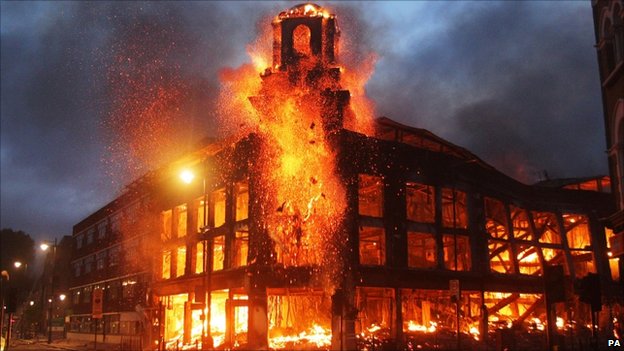
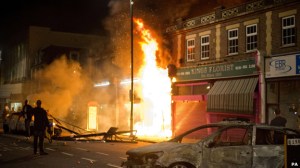
The disturbances on the night of August 6th following a vigil for local man Mark Duggan, allegedly shot by police three days earlier, became the spark that ignited the most widespread and sustained civil disobedience in Britain since the early 80s. Yet Tottenham remains the area that has suffered the most. As well as the damage to property that resulted in the subsequent demolition of several buildings, up to 200 people were made homeless. Urgent calls for donations of food, clothing and nappies were reminiscent of disaster appeals. A leisure centre provided emergency shelter for families in need.

The burnt-out Carpetright store heavily featured on the news is a few hundred yards from the ground but the club remained unscathed apart from some damage to the ticket office. Tottenham High Road, the main route to the ground by car and public transport, remained closed for several days, causing the postponement of the season’s opening fixture against Everton.
Tottenham is an area of considerable social deprivation. Tottenham Hotspur, regularly in the world’s top 15 in terms of annual income, falls within a ward that is amongst the 5% most deprived in England, while in Tottenham as a whole 80.3% of children live in low-income homes. It is natural therefore that both local residents and politicians should look to the club, the largest local private employer, as a major partner as the rebuilding begins.

Victoria Hart lives on the High Road and spent a long Saturday night comforting a frightened and bewildered 6 year old as the troubles raged outside her window. Not a fan, she is nevertheless convinced that the club has an essential contribution to make in restoring the health and well-being of this fractured community.

“We all feel very damaged by the riots and the destruction around us. We want to retain a pride in Tottenham but it’s difficult when the press perception seems to be of a locality where a riot was ‘just bound’ to happen. I hope the football club, being one of the really identifiable places on the High Road, can help us to rebuild. And I really mean more emotionally than financially.”

Early signs were positive. Spurs Chairman Daniel Levy swiftly promised support now and in the future:

“The Club is committed to supporting its community with help with both the physical clean-up of our area and the longer term rebuilding of community spirit. It is more critical than ever that community, business and political leaders…now work closely together to support the regeneration of this area and we shall certainly look to play our part in that.”

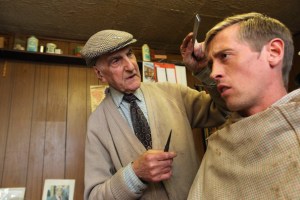
The fans responded too. Many travelled to Tottenham on their spare Saturday to labour alongside local people as the clean-up continued, whilst an internet appeal of behalf of 89 year old barber Aaron Biber raised over £35,000 as word spread amongst the messageboards and twitterati. The refurbished shop was reopened by Peter Crouch, looking decidedly edgy despite the carefully choreographed photo opportunity as Biber approached from behind with clippers in hand.
Otherwise it was left to Benoit Assou Ekotto to respond on behalf of the players. This comes as little surprise to Spurs fans. Derided by Hansen and Dixon from the comfort of the MOTD sofa, the full-back is fast attaining cult status for both his dashing if occasionally risky performances and his grounded attitude. Travelling London by public transport, he’s made a conscious effort to be close to the city and its people, eschewing the trappings of celebrity in order to ‘live a normal life’. Aware of his own impoverished upbringing, he understands that football is part of something much bigger. It is he rather than the British players who talks earnestly to local people a few days after the disturbances.

The club has developed an increasing awareness of the community over the past few years. In 2007 they invested £4.5m in a Foundation that boasts a proud record of achievement: 470 hours of sporting and education sessions for children a week, support for the unemployed, a chance for the homeless and adults with learning disabilities to play football plus the highest rate of charitable giving in the Premier League.

Yet the local impact is questionable. Mark Perryman, author, co-founder of Philosophy Football and West Stand season ticket holder, trenchantly dismisses the club’s performance in the 25 years he’s lived locally:

“The club makes the name of the borough known worldwide but otherwise I don’t see what it gives the area. Away from the ground itself the club’s presence physically is almost non-existent and it’s painfully obvious how disconnected the club is. It’s just not a significant institution in the community in which I live.”

The club’s investment in ‘Football in the Community’ schemes is generous and laudable, but the question is, which community? The popular coaching sessions and soccer schools reach out primarily to the relatively affluent suburban fan bases in Hertfordshire and Essex rather than the N17 estates and thus are designed to win fans rather than directly benefit the local community.

Perryman also casts doubt on their claim as a major employer, pointing out that most of the jobs are on matchdays only and are not filled by local people. Also, some of the highest ticket prices in the country mean locals cannot afford to watch their team.

This problem is not confined to Spurs. Rather, it’s one of the consequences of the modern game as supporter demographics change in response to increased prices and the blurring of social boundaries. Perryman again:

“London clubs aren’t London clubs, they’re Home Counties clubs. Those who can afford season tickets don’t live in inner London. They are not in the community where those kids emerged from. Where I sit, they [fellow supporters] don’t seem to like Tottenham as a place. There may have been a connection a generation or so ago, not now.”

The meaning of all this is not lost on Victoria Hart: “I’d say a lot of people like me who live locally retained a kind of benign neutrality towards the club. It is a part of the local area and the local history and of course, carries the name of the place we call home but especially recently with the attempts to bid for the Olympic Stadium, we didn’t kid ourselves that they’d really rather be further out towards Essex where most of the fan base seem to live.”

This is the paradoxical nature of the Hotspur in Tottenham, an attachment to an area but distant and out of reach at the same time. “I see the fans coming and going past our homes and regard them fondly but I’ve never been to a Spurs match – too expensive!”

Her words hint at the most revealing measure of the club’s relationship to the community of which it has been an integral part for 129 years, the planning for a new ground. Precisely as he talks about increased community engagement, Levy is actively exploring a move away from Tottenham entirely. Economics overrides history or community responsibility when it comes to the option of the Olympic Park site in east London to replace the venerable but creaking White Hart Lane, which will be cheaper to build and generate greater income from non-football activity. Undeterred by opposition from a large and vocal section of the fans and a public aghast that Spurs propose to demolish the Olympic stadium built with taxpayers money and which will be the focus of world attention for two weeks next summer, Levy is keeping the option open for as long as possible. Even the decision to award West Ham the dubious honour did not stop him launching an expensive and ultimately successful judicial review. His sympathetic and compassionate support for the local community suddenly sounds decidedly hollow.

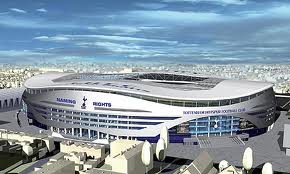
The alternative is a 56,250 capacity ground with an ‘end’ and stands close the pitch right next to White Hart Lane. Properly called the Northumberland Development Project, it includes housing, a hotel, supermarket and renovated listed buildings. Together with improved transport links it should reinvigorate the area as well as the finances of the football club. Supporters’ groups continue the campaign to stay in Tottenham but now the project takes on a significance greater than merely preserving the club’s heritage.
It’s an ill wind and although the area lost out on the latest round of government regeneration money, the recent problems have boosted the case for grants from the Regional Growth Fund, which could cut the costs Spurs will incur in upgrading public transport links and other improvements around the ground, costs they have long claimed should come from the public purse. It would not be factor if they moved to Stratford, of course.

I have asked the club for a comment regarding their response to the community in the wake of the riots but they have not replied. Levy would say that he must do the best for the club. His business acumen has left the club financially secure and has won grudging admiration from most fans, even those who wanted greater investment in the team over the last two years. His deadline-day brinkmanship has become legendary and I respect his refusal to pay over the odds. However, for every great deal – Lennon, Keane and a pound of flesh from a destitute Leeds comes to mind – there have been opportunities missed because of his refusal to compromise. He would do well to ensure that he doesn’t make the same mistake over what is effectively the future of the club.

His decision is further complicated by the increased number of stakeholders who are now part of the equation. As chairman he is duty bound to keep the PLC on a sound financial footing. However, the interests of shareholders seeking a profit may not not be the same as fans wanting success on the pitch. Also, to ascertain the intentions of his employer, ENIC, look no further than the name: it’s an Investment company looking for long term return, which may best be served by making the club ready for a sale.

In addition, there’s now a responsibility to the local community who desperately want the club to stay where it is, a powerful argument that cuts little or no ice on the balance sheet. Indeed, these aims are in direct conflict with those of investors. In my experience of working in the charitable sector, private companies are comfortable with activities like fund-raising and donations but less sure-footed when it comes to the openness and adherence to goals that are not easily measured that true engagement requires. He may have to adjust his approach.

One outcome could please everyone, however: the riots as leverage for assistance to make the NDP a profitable option again. Some characterise Levy as a ruthless negotiator but it is a cold hard fact that the disturbances have suddenly shifted the financial impasse. In late August, London mayor Boris Johnson made available a large sum, at least £8m, to cover these infrastructure costs on condition that Spurs dropped the review. Even MP David Lammy thought agreement had been reached but the following day Spurs tuned up in court and went ahead as if nothing had happened.

The deadline for another offer came and went this week. ENIC say the City Hall deadline is unreasonable, and “the correct level” of public money is “critical … to create a community with hope and prospects … We cannot be expected to do this single-handedly.” Levy clearly believes the offer will not go away just because the deadline has passed. However, there may come a time when local politicians find better ways of spending their £8m windfall.

Another stakeholder has recently entered the fray. Spurs Future is a loose collective of fans who has have submitted detailed proposals to the club regarding a ‘community share’. Basically, this allows for up to £50m of investment from fans and other sources who purchase shares or bonds for the purpose of financing ventures of a community purpose. A return on the investment is possible and it encourages greater participation and involvement. I understand talks have taken place with the club but it’s at an early stage. £50m could come in handy for ENIC but they may baulk at ceding any influence over the running of the club to supporters. There’s also the question of how fans see the idea of giving this prodigious sum to a company owned by Joe Lewis, a man worth £2.8bn and 6th on the world football richlist.

Talking with residents, the club is part of their lives and has the potential to be the focus for their determination to rebuild relationships as well as bricks and mortar. The stadium project, important though it may be, is not in itself enough. “I have no great faith in the idea that stadia can regenerate an area,” says Mark Perryman, concerned about the future of his community and his club. “Spurs has to develop a relationship with those estates where the kids live,” says Mark Perryman. “They must develop dialogue not summer schools.”

I leave the last word with Victoria Hart. “I hope it helps the club and the community work together to make Tottenham a better place. That would help and it would help emotionally as we residents feel a little abandoned at the moment. We always needed the club but we need it a whole lot more now.”