An Unassuming Hero: A Tribute To Ledley King

He departed in the manner that befits the man. News of Ledley King’s retirement slipped out on the official site, no press conference or media blitz, just a few heartfelt words in tribute to the club he served with unswerving loyalty, tinged with unspoken regret at what might have been.

King never sought to draw attention to himself. Rather, he preferred to get on with the job at hand, protecting the Spurs goal from all-comers. This is the main reason why he’s not better known throughout Europe and the world, not his injuries. Debilitating and cruel though they were, never could they fully diminish the talent of the finest centre half of his generation and unquestionably an all-time Tottenham great.

No fist-pumping exhortations to team-mates. Perhaps if he had, more kudos would have come his way. Just the example of do as I do, show your skill, demonstrate dedication and committment and Spurs will triumph. Such a shame only some chose to follow his lead. Neither did he possess any one single attribute to distinguish him from the rest. He was tough, strong in the air but without the physical presence of many top centre halves. To the causal observer he didn’t have lightning pace or perfect touch. That’s why other, inferior players were noticed, praised to excess, demeaning the language with the use of words like legend, greatness, words that belong not to them but to Ledley King, a virtuoso of the defender’s art who made strikers sing to his tune.

But we knew. Those of us who had the privilege of being there, close up, watching him work, we understood. Week in, week out. A forward would slip away, pull back his boot to shoot only to find the ball had gone. Darting at pace into the box but Ledley is first. Back to goal, surely now the striker is immune, then a nudge here, a toe there, and gone. Gone before they knew what was happening because when the strike came, it was clean and silent, the product of shrewd anticipation and impeccable, unrivalled timing.
Here are the master’s secrets. Anticipation: understand not just what is happening but what might take place. Be on the move: better to slip into place unnoticed off the ball than hammer hell for leather in pursuit, even though that might catch the eye of the uninitiated. Don’t commit too early: refuse to be drawn into tussles that can’t be won. Not too far away from the man he was marking or else lose him, not too close because risk being turned. Just the right place, right time. Turn quickly: superlative midfield maestros like Gazza or Modric drop their shoulder and are gone in the blink of an eye. Ledley did the same only in defence, on the move a fraction quicker than most, get ahead of the man, shoulder inside, make the tackle. Pace over five or ten yards: that’s what you need in the box. Quick off the mark, short jabbing strides like a sprinter out of the blocks, minimal clearance from the turf, all the effort geared towards one aim, to get their first.

No dismissals, only 8 bookings. Partly because he’s a decent man in the cesspit of the Premier League, mainly because he tackled clean and did not get caught out so had no need to foul. Henry: King was the only defender who got the better of me without resorting to foul play.

I weep at what might have been, shed tears for each time he hobbled off. Ledley fully fit along the way, yet his latter years will linger long in the memory because of his indefatigible determination to pull on a white shirt, navy blue shorts and play. Football is a physical game – he couldn’t train but still he carried on. Couldn’t run, had no sense whether he could last 9 seconds, 9 minutes or 95. Couldn’t play football with his son in the back garden, all because he wanted to, had to, play for the white shirt and navy blue. One club, our club, he’s my inspiration. I hope we deserved him.
His half a career eclipsed his contemporaries, the finest British centre half of his generation. Eventually, it had to end. Perhaps his most remarkable achievement was to stop the clocks for as long as he did. Look for mistakes in those later years and they are few and far between. December last and I wondered if the moment had finally come, but I should not have doubted him. Here’s what I wrote when we played Chelsea:

We mopped up many attacks but never quite picked up their runs from deep. Gallas rose to the challenge, becoming more assertive, while King was alert and quick. He and Sturridge set off on a chase. This was more than a dangerous throughball on the right wing. It was the old master versus the young pretender.

In the blink of an eye, it could have been the changing of the guard. Ledley has learned to turn quickly and maintain a chopped economical stride to coax the maximum effort from those battered, weary bones. He was ahead but the young man pressed from behind. Eager and willing, he sensed weakness and quickened. Shoulder to shoulder at full speed now, for a moment he eased ahead but Ledley stretched one last time and came away with the ball, the master still. Long live the King.

On the field, you never saw him moaning at refs or other players. Ian Wright: he made me mad because he never bloody said anything, all game, whatever I threw at him. Off it, no celebrity status, no transfer requests. Drunk once or twice, nothing more.

In fact, we know hardly anything about him but we understand the man because of the honourable way he played the game. That’s all there is to know. He carried himself with dignity, with the humble modesty of the truly great. My favourite, my all-time Spurs centre half, my unassuming hero.

Postscript:

This is a youtube video of King tackling Arjen Robben. You’ve probably seen it before but today I’m drawn to watching it over and over again. I was there. I recall the sinking feeling as Robben approached the goal. We were playing well at the time against opponents who always beat us, and in what seemed like endless minutes there was time to reflect on how we’d thrown it all away. Again. Ledley was in pursuit but he appeared as if from nowhere. Look again – at full pelt after sprinting 50 yards his intervention is clean and pure, no hint of a foul. Watch once more, this time focus on the crowd who leap joyfully into the air as if we had scored. Ledley could do that.

Redknapp Loses His Value To Spurs

So Harry Redknapp departs with my sincere gratitude but no tears. Tottenham Hotspur goes on, first, last and everything, as ever it will be. Those good players are still Spurs players. Daniel Levy is in charge, and he always was. 

As news of Harry’s dismissal leaked out last night, the social media debate raged over the rights and wrongs. Much of it focussed on the end of last season – basically, 4th/5th/4th versus ten points clear of Arsenal. Spurs fan, author Adam Powley lamented on twitter: “before theinterweb did football fans of the same club endlessly argue the same arguments over and over and over again?”

It is and always was something more fundamental. It’s about the future of our club. In this regard, Redknapp gets all the publicity, Levy holds all the cards. The two seem never to have got on especially well but I doubt that matters unduly. In football and in any business personal relationships are of secondary importance to the main goal, success. My view has always been that Levy made Redknapp a better manager because he reined in his excesses by seeking medium to long-term value in any purchases. Our success is based on a steady stream of young players and players for whom Spurs is a genuine step up the ladder. Redknapp complemented them by finding value in experience – Parker and Van der Vaart the best examples, Adebayor on loan, Pienaar at £2m – which turned us into one of the best sides in the country and for a precious, magical time title contenders. 

The media concentrates on the players wheeler-dealer ‘arry was not permitted to buy but the primary issue here is the value to the club of the manager. Redknapp took his eye off the ball at the end of last season. The England job was a profound distraction whatever Redknapp claims to the contrary and I strongly believe the court case took much more out of him than anyone is willing to acknowledge. People assumed it’s over, now he can move on: rubbish. That’s not how the human mind works. Relief is the overriding emotion. Mind and body relax and although it feels good, it dulls the senses. Football managers have to be on top form all the time. They have no chance, no room, to relax, yet this phase of letting go then rebuilding and planning ahead has to be worked through from beginning to end. Inconveniently for us, unavoidably for Redknapp, that coincided with the climax to our season. His decisions were consistently poor and by the time he was ready, our time had passed. I doubt he had a full understanding of what was happening to him. 

Now he’s looking to the future and he’s restless. He wanted assurances more permanent than either a three/four year  or 12 month rolling contract allow, the shark agent no doubt whispering in his ear how much other clubs will pay for his restorative powers. Levy however is made of different stuff. Levy sorts out the club’s future whilst sitting shiva for his late mother. He has no time for those who are distracted. He kept a grip. Eye on the ball, eye on the prize.

Levy saw weakness and fatally it tipped the balance. Redknapp has accomplished a hell of a lot for this club but that’s in the past. Levy showed sentiment as he grieved. In business, he’s as cold as ice. He calculated the future to Tottenham Hotspur of a man who inspired the side to the quarter finals of the Champions league, whose players dazzled the league. Value. Redknapp wants more money but he’s 65 and his powers may be on the wane. When the going was tough, he didn’t get going. It’s not about the odd hundred thou, it’s tying Spurs into compensation of anywhere between £4m and £12m if it doesn’t work out, never mind the cash for Harry’s pals in the dugout. Not worth it, on balance. Harsh, perhaps not fair, but on balance, correct.

My view? Covered in the post before this one. Just scroll down a bit, it’s OK. Not a Harry lover but I supported another year provided Redknapp had but a single thought on his mind – the glory of Tottenham Hotspur Football Club. If he was focussed and motivated, he should carry on. I don’t think he is. If another season managing this group of wonderful players for a great club at £4m a year is not sufficient ambition, then he should go elsewhere.

He won’t care a jot but he goes with my abiding thanks. The best football for over thirty years, the shimmering brilliance of a flowing, attacking, passing game – he did that, and to me whilst I won’t forget the dross, the missed opportunities, those memories burn brighter. Praising his achievements isn’t to say that someone else won’t be able to do it better. And dross and missed opportunites I can deal with. I’m a Spurs fan.

Consistency is what we crave, a man to stick by us, maybe someone who pays more attention to the heritage of this club that is held is trust by us, the fans. Daniel, we’re looking to you, because everything at this club, you make it happen. You’re better with balance sheets than you are with managers, so be careful. Be honest, Redknapp was a short-term appointment that in fact has endured remarkably well.

Tread warily. The media will be after you, because you’ve done down their mate. Two seasons running, we collapse at the end of the season, not a murmur. The players were tired, act of god rather than being Harry’s fault. Now, one slip and they’ll be on us. A start to the season where we are, heaven forfend, outside the CL places, and it will be a crisis, mark my words. So be careful and do your best. Don’t waste this squad. We’re counting on you.


End Of An Era

Earlier this week I received formal notification that Tottenham Hotspur PLC is proposing to de-list its shares and become a private company again. As a shareholder, I’ve been kept fully informed even though the postage on the thick wad of legalese cost twice as much as the value of my holding. I have one share, literally a share holder, so that’s very sweet of them, although as a responsible shareholder I feel disappointed and concerned that the board have wasted this expense on schmucks like me for whom it makes no difference. Add up the postage, labour and paper, it’s enough to pay Manu’s wages for at least 12 hours.

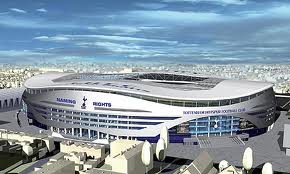
Frankly I have no idea what it means for the club’s finances. Daniel Levy says the listing “restricts our ability to secure funding for its future development.” That is, the new ground is easier to fund this way and if that means we are a step closer to the NDP, I’m delighted. Levy is a master of his world, finance, and has always looked after the club in this respect. Even with our low capacity we made an operating profit of £32m, a rise of 42%, boosted by the Champions League pot of gold.

Management Today(what do you mean, you don’t read it daily?) takes a more cynical view, wondering

spurs blog 57

Buy Al's Share, Buy! Buy!

if the furore over the Olympic Stadium has lead Spurs to prefer life without the added scrutiny of external shareholders. Then there’s Redknapp’s forthcoming court case which is scheduled for January, the same time as the de-listing. Pure coincidence, but the assuredly bad publicity can now have no affect on the share price. It doesn’t mention suspicions that the ‘I’ in ENIC means they have half an eye on a future sale.

What I do know is that this is the end of an era. Nowadays it’s commonplace for football clubs to be listed companies but Spurs were the first and it wasn’t that long ago. In 1983 an ambitious businessman called Irving Scholar was determined to make his mark as our new chairman. Before then, the club had for many years been run as a private company by the Wale family but by applying the same business principles that had made him a wealthy man, Scholar aimed to drag football finances into the twentieth century even though it was almost over. In the process, Spurs would become the richest team in the land.

As well as going public and raising money on the Stock Exchange, Scholar took over two clothing and sportswear companies, including Hummel, fondly remembered for providing Alan Ball’s revolutionary white boots. The ground was empty save for one or two days a month, so use it for alternatives at no extra fixed cost. The space under the Park Lane became a factory. The income was to be ploughed back into the club, a secure stream unaffected by the uncertainties of league position.

Scholar shrewdly assessed the zeitgeist. Leaving aside the rights and wrongs (not easy for me to do but anyway..), we were in the midst of Thatcher’s property-owning democracy where the public could buy pieces of the de-nationalised industries, make some easy money and feel part of things. To borrow from contemporary politics, we were all in this together, except that times were good.

On top of that, Spurs fans were offered the unique chance to be a part of the club. Long excluded, unlike like any other fans we could now have our say and influence the future. It proved popular. I don’t have any statistics to back this up but I reckon the number one Christmas present for Spurs fans that year was a share certificate.  There’s no doubt that the share offer caught the prevailing mood.

spurs new stadium

I've helped buy that

I was given a hundred shares by my then girlfriend. It was worth about £160 but to me it was a priceless token, sealing my attachment to her and to the club. These were the only shares I have ever owned and I kept an eye on their progress, all the while thinking that like the family heirloom on the Antiques Roadshow, I will be delighted to be told it’s worth a fortune but I would never sell. Many fans of different clubs have their certificate framed on display, proving it means something.

At one point they were valued at over £500 but soon they plummeted, as did the relationship. By the time I was kicked out and the shares sold to get rid of a painful reminder of happier days, they raised less than £100. Spurs’ romance with the new ways faded just as brutally. We sold our finest players Waddle and Gascoigne to stave off financial ruin and the businesses failed. Maxwell was a telephone call away from taking over the club so perhaps we should be grateful for Alan Sugar sorting out the mess Scholar left behind. Actually, perhaps not, but again, that’s a story for another time.

It was then that the true nature of the new era became clear. Thatcher’s meritocracy was nothing of the sort. Power and wealth became concentrated in the hands of the few and the gap between rich and poor widened. As with society, so it was with football. The advent of the Premiership and the Champions League meant that the top clubs and Sky TV held sway. Rocketing admission prices transformed the fan experience with many alienated for good, never to come back, and others priced out of the game they loved. Kick-off times were at the whim of television. PLC not F.C. Far from being part of things, football fans had never been more helpless.

Now we’re all experts on football finance. We have to be because it’s all over the back pages and otherwise we can’t keep up with events at our clubs. Never mind 4-4-2 or 4-3-3, it’s the income to salaries gearing that holds the key to success. False 9 or false accounts? Ask some of the clubs that have gone down the tube. Despite the sterling efforts of fans’ organisations and protest groups, the legacy of football shareholding is that many of us feel more distant from the game, our game, than at any point in living memory.

I’m still in play, mind, thanks to the gift a few years ago from my daughter of a single Spurs share. It came in a fancy tin box (safety deposit, just in case?) with some blurb about the club. Now that’s a juicy business to be in – buy the share for next to nothing, add cheap packaging and charge £19.99. Football fans are nothing if not loyal and gullible.

So what to do about the de-listing? I don’t know where the certificate is but I recently found my last dividend cheque, £0.04, proudly un-cashed. The PLC tell me my share is worth 33p and I have until 11th January to decide. I could sell, and use the results of my foray into the murky world of high  finance to buy, say, a 6th of a cup of instant tea or coffee on matchday, or two gulps of water. I expect that I won’t be bothered, however, and will keep it as a souvenir of the days when the club couldn’t be bothered about me either.

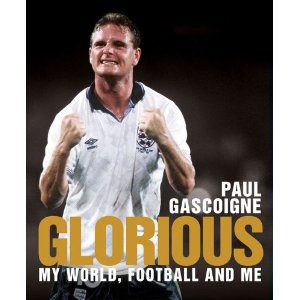
Glorious – Gazza In His Own Words. Read the Review, Win the Book!!

Last summer I heard rumours that Paul Gascoigne was dead. Unlike the rest of the rubbish that circulates the ether, sadly this had the ring of truth. He had been looking more pale and drawn than ever and the stories more bizarre, if that were possible.

Gazza stopped being daft as a brush years ago but the nation kept on laughing. One of the finest footballers of his generation, he’d become a figure of ridicule, easy meat and easy laughs from comedians getting fat on the proceeds of panel shows. In football, mental health problems are taboo. He’d sunk so low that he was denied even his illness. On the contrary, his suffering was exploited by reporters after a story and chairman offering him work.

Mercifully, he’s survived. It’s impossible to know if the empathy from Spurs fans played the tiniest part in keeping him going, but I can’t ever recall such a wave of goodwill towards an ex-Spur. He’s hidden away in Bournemouth, out of rehab but still being supported well, slow progress but steady.

The book is a lavishly illustrated conversation with Paul about his entire career, just turn on the recorder and out streams an engaging, flowing account of his life from the man himself. After a while, close your eyes and you can imagine him in the room, chatting over a cup of tea. This plus the hundreds of colour photos make it a pleasant, welcoming read that tells you about the man’s football career without stretching the reader too far.

The therapy that has played a part of Gascoigne’s rehabilitation enables to him to reflect on what’s gone wrong in an honest, self-aware manner without becoming maudlin or self-indulgent, as is the fate of many other celebrities who have been through the same process.There’s no evaluation, either from an outside voice or from Gascoigne, and nothing about his mental health or his career, if you can call it that, since retirement. This is purely and simply about football. The reader is left to provide the context and whilst many familiar episodes are covered, like the dentist’s chair, escaping the boredom of international tournaments and high jinks at Rangers, there is a refreshing lack of spin or image. This isn’t Gazza – daft as brush, Gazza – the alcoholic or even Gazza – the idiot. It’s just Gazza. He acknowledges in a matter of fact way that he should not have done certain things but what comes over is the total lack of malice in anything that he did. He never had an agenda, a grudge or sought to exact revenge. Most of the time he got into trouble because just the opposite, he never had a plan or thought anything through, but you sense this is why, despite all the things he has got up to, no one in football seems to have a bad word to say about him.

In fact, he comes over as boyish, getting into the same scrapes as a man as he did as a lad. His mind wandering onto other things, football mostly when he should have been studying, losing Kevin’s Keegan’s boot as an apprentice then forgetting his own boots before a crucial game in Euro ‘96. Same response – he can’t tell anyone so it’s a farcical attempt to cover it up, in the case of England playing the entire first half in Sheringham’s spare boots, which were the wrong size.

He confirms what Spurs fans already know, that he played the best football of his career whilst at White Hart Lane. So it’s a little disappointing that the space given over to Spurs is much less than that devoted to England or Rangers. I guess the publishers understand the market. Also, many anecdotes will have a familiar ring for anyone who has read Hunter Davies’ excellent book on Gazza.

The section on Spurs focuses on his remarkable contribution to the 1991 cup run. At the time it seemed to me that he single-handedly inspired the team to Wembley. In reality, the famous victories in the semi-final against Arsenal and the final were founded upon excellent teamwork, and Gascoigne praises the unsung Paul Stewart in particular for “covering the space for me” as Gazza was knackered, either because he was playing in pain through injury or because he prepares for a vital cup-tie by playing 15 sets of squash with John Moncur the night before as he can’t sleep. But the inspiration and glory are rightfully his. A hat-trick against Oxford, a scintillating winner away to Portsmouth, another versus Notts County, all tricky ties, plus the free-kick that will ensure his legendary status for as long as anyone talks about Tottenham Hotspur. Typically he doesn’t dwell on it – cue anecdotes involving nurses, hospitals and testicles – but the effort he made to play through injuries and then to sweat blood to get fit after surgery is nothing short of heroic. He did that for the good of playing football. He did that for us.

In any walk of life, the very greatest tread a fine line between the bold and the reckless. To be original and different, the individual has to think and do something that is fresh and new. What is to our heroes an act of bravery, to us mere mortals seems like the height of foolishness. Gascoigne treads that fine line throughout his career and this book helps you walk with him. The character traits that made him infuriating and a magnet for trouble are the very same that enabled him also to attempt the most outrageous feats on the pitch, and because he was so, so wonderful, he succeeded where most would fail.

Gazza’s an entertaining companion and this is a engaging read in time for the Christmas market. It’s not a confessional, but if there is a message from a fallen hero to the young players of today, it’s not about the dangers of the booze, the sycophants or the lack of support of family and friends, it’s that players should love and cherish the game. If that’s Gazza’s legacy, then this book is a success, for it is above all else about a man who just wants to play football. Rather than the grey, bewildered figure of fun blinking uncomprehending in the spotlight, running on empty, please remember him as he should be remembered, the breath-taking talent of the one of greatest Tottenham players there has ever been.

A couple of my other pieces on Gazza here, about his career, and here, about mental health, Chris Evans and Danny Baker

Glorious – My World, Football and Me by Paul Gascoigne   Published by  Simon and Schuster

WIN A COPY

My copy actually, read once, one careful owner, and the biryani stains will come out with a bit of soap and water.

To win answer this question:

To persuade Gazza to sign for Spurs and not Fergie, Irving Scholar sealed the deal with a few extra items that don’t normally feature in transfer negotiations. Name any of them.

If you need a nudge in the right direction, one item Gazza would be delighted to receive these days and would put to good use in his leisure time (and before you start, he’s off the booze)

E-mail your answer to: alan@tottenhamonmymind.com

Closing date: Tuesday 1st November, 8pm, all correct entries into a hat, first one out wins

And while you’re here, 1 family, 3 generations of Spurs fans are taking part on Saturday in a Family Hike in aid of the British Association for Adoption and Fostering.

You can sponsor us here: Just Giving – Family Hike for BAAF

Just a quid would be great.